re-assembled: the paper doll coat
An award-winning modular no-sew coat that transforms unsellable secondhand garments into a circular textile system.
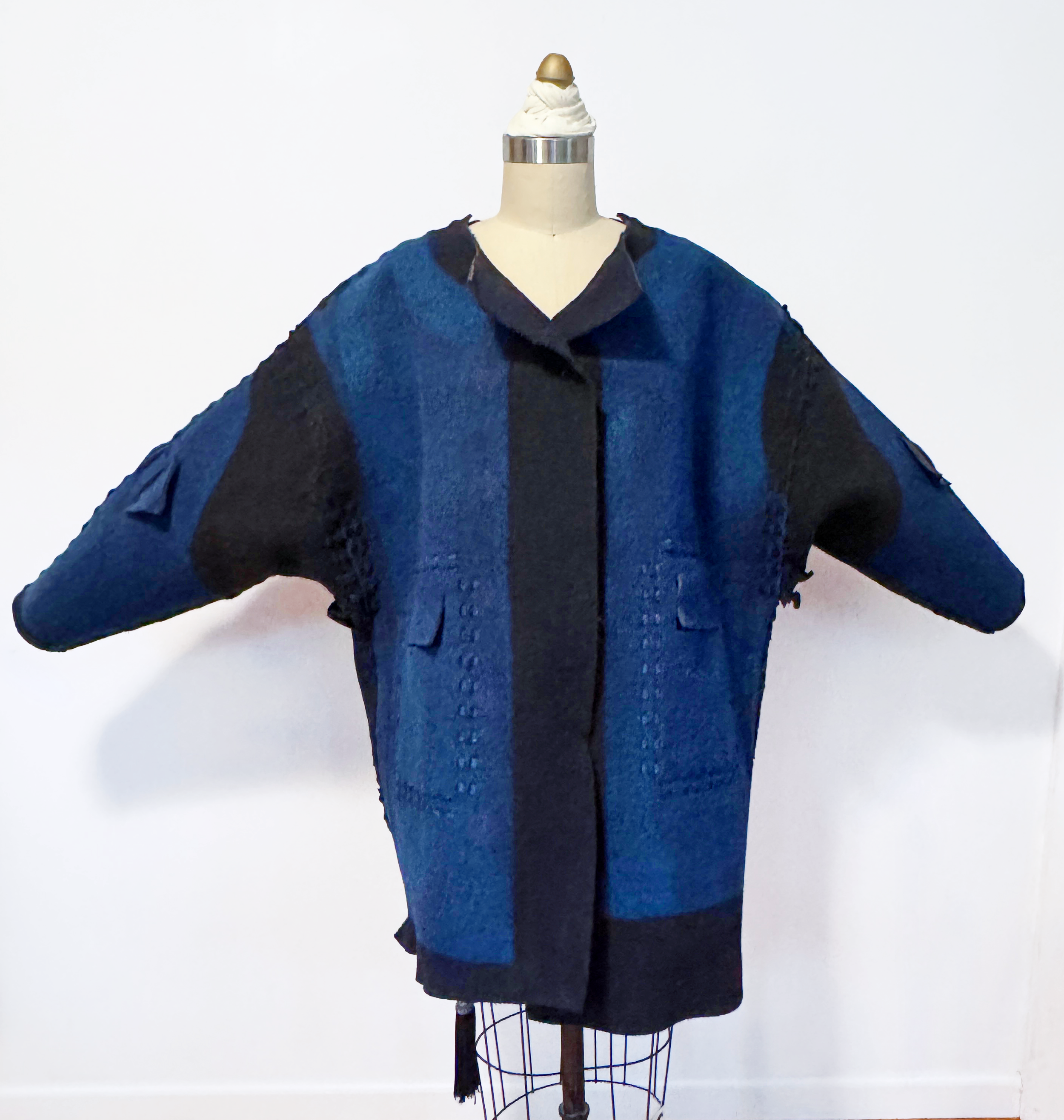
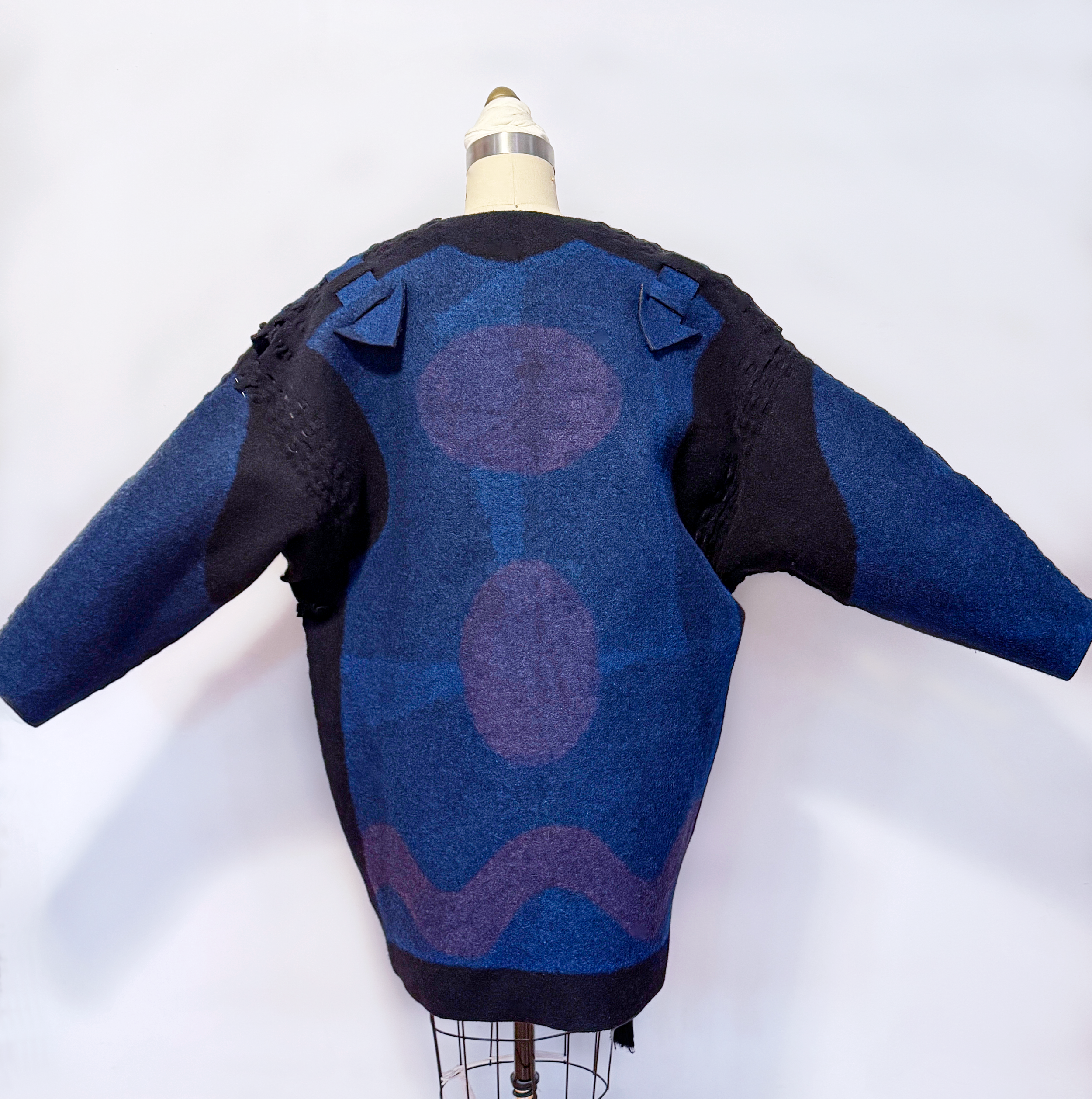
Re-Assembled: The Paper Doll Coat is an award-winning creative research project that transforms unsellable secondhand garments into a modular, no-sew textile system. Using mechanically felted composite panels and laser-cut tab-and-slot construction, the work explores circular design through reuse, disassembly, adaptability, and visible construction logic.
overview
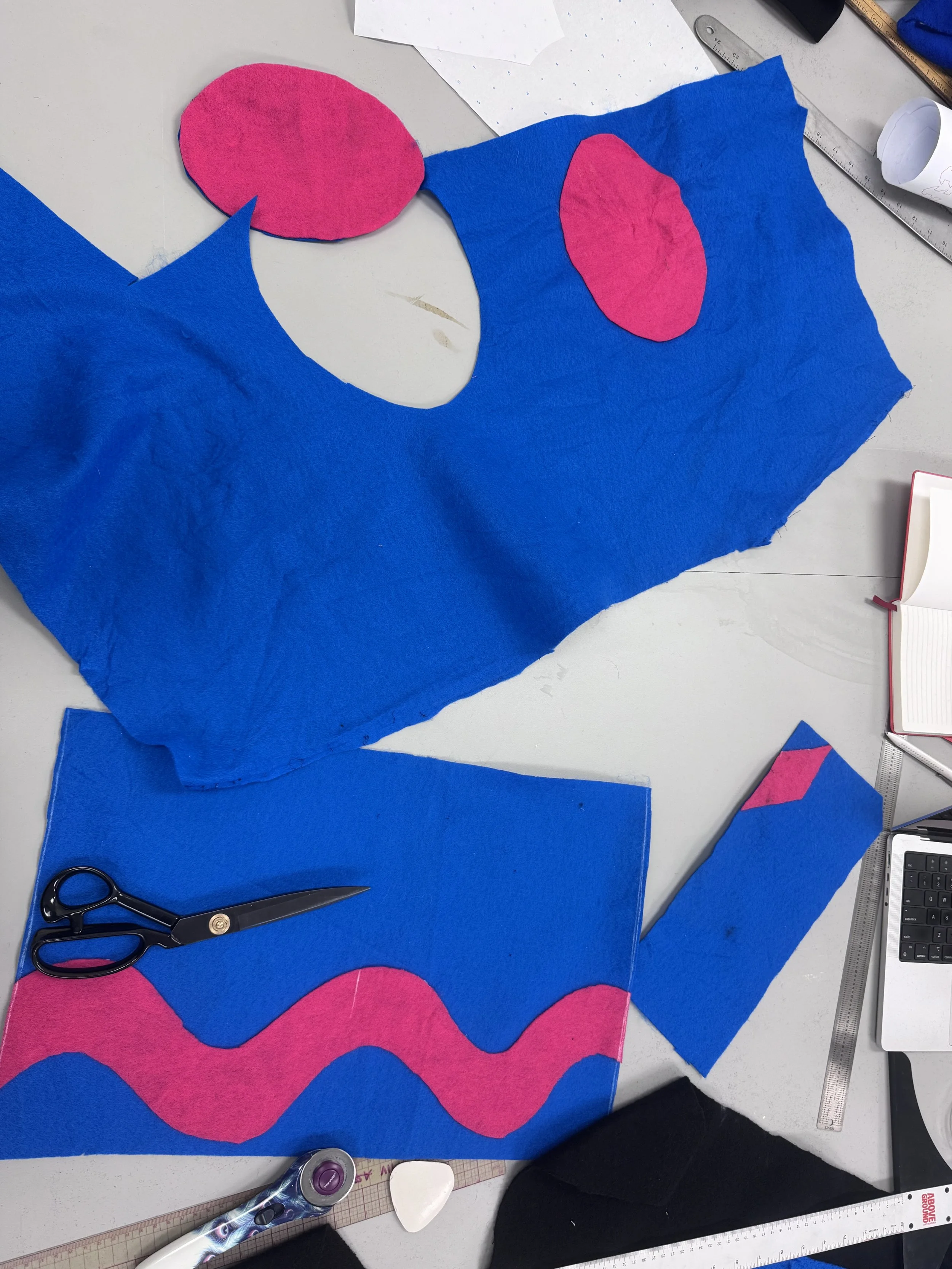
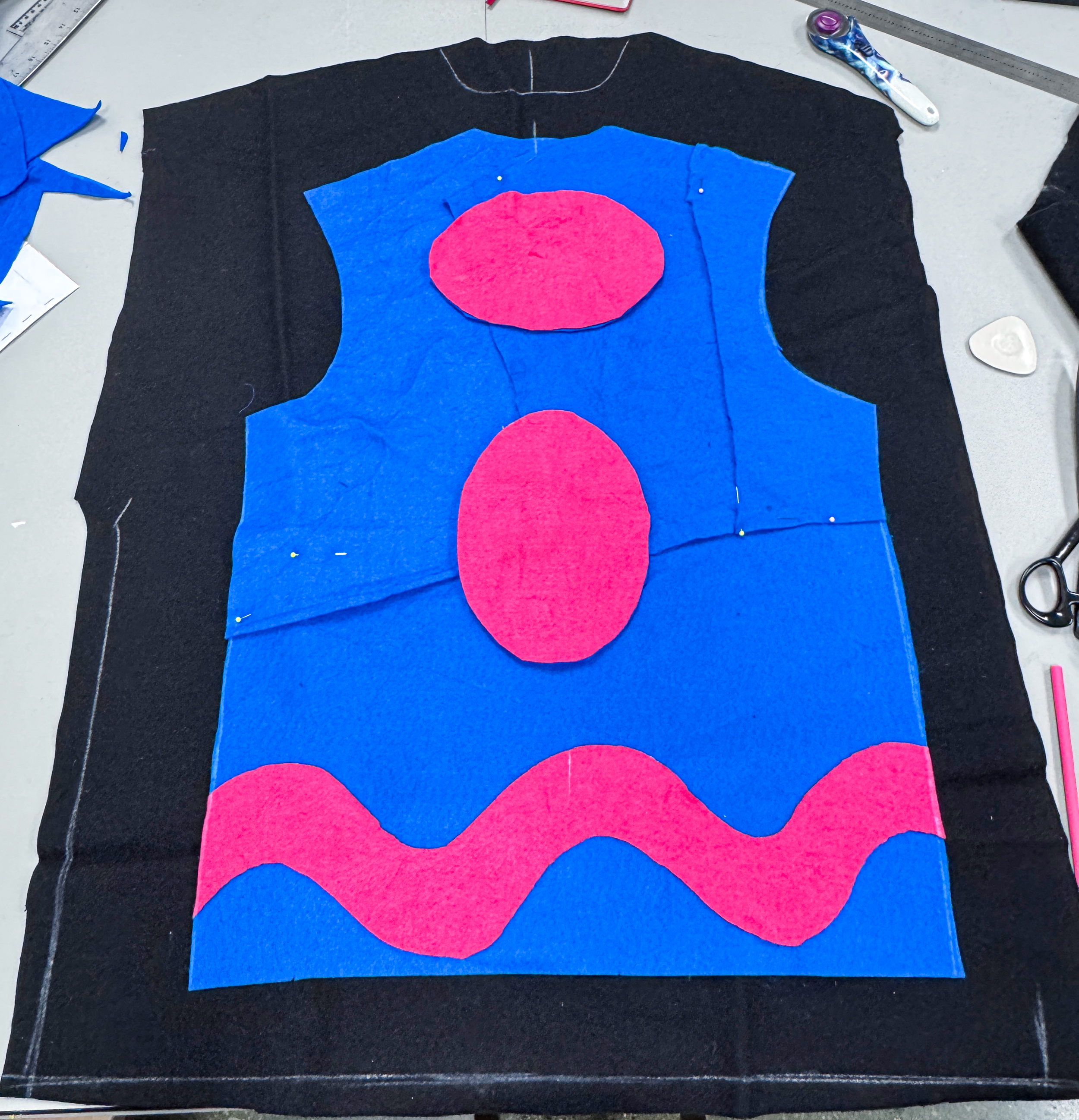
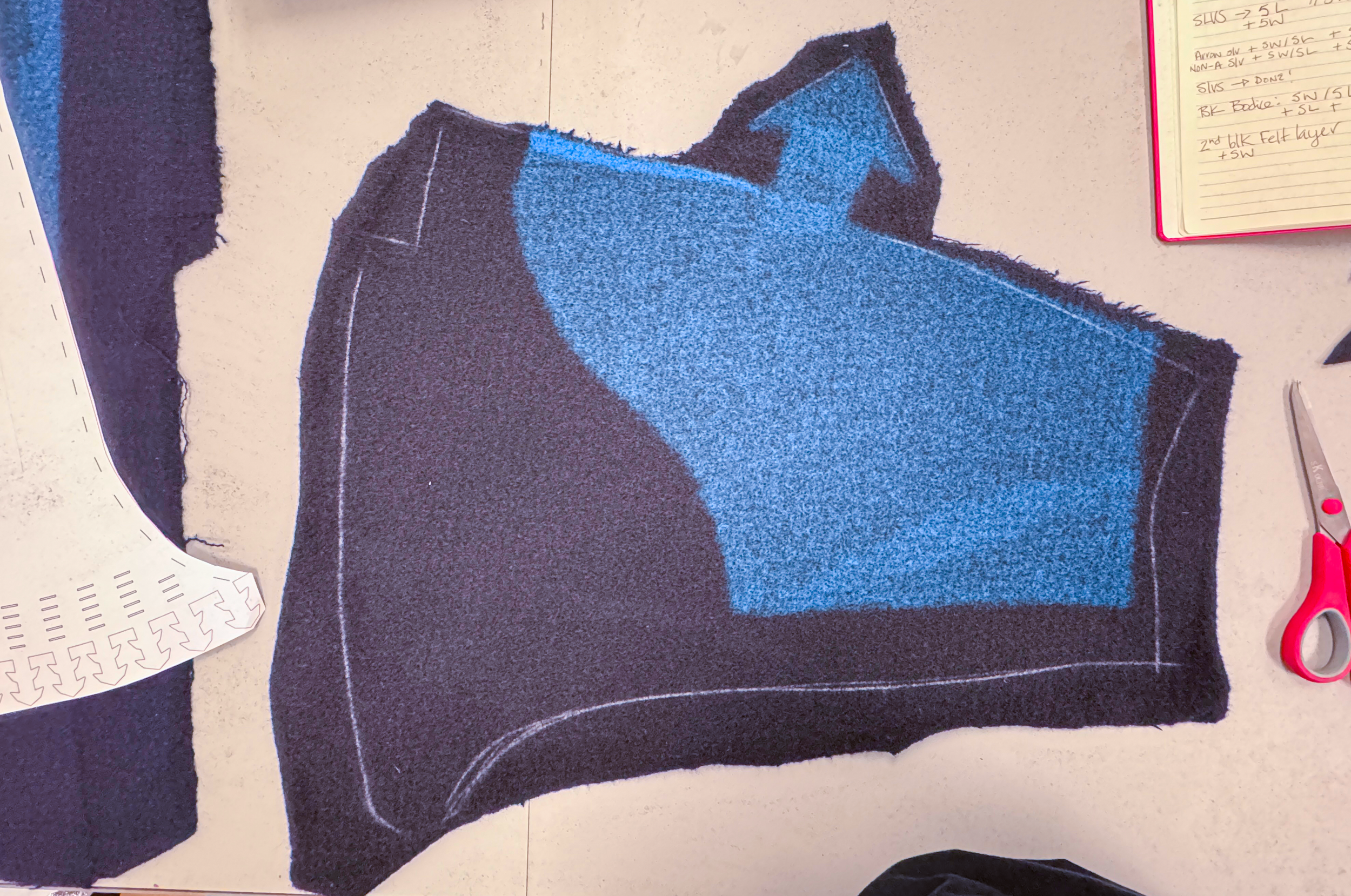
The coat was developed from discarded garments recovered from a secondhand clothing sorting facility in Laredo, Texas, a major transshipment hub where surplus clothing from thrift chains is sorted for resale and export. Two garments — a black wool coat and a blue-and-pink synthetic Halloween costume — were disassembled and mechanically felted into new composite textile panels that retained traces of their prior identities. The resulting felted material was laser-cut into a modular garment system that requires no sewing thread, zippers, or fasteners.
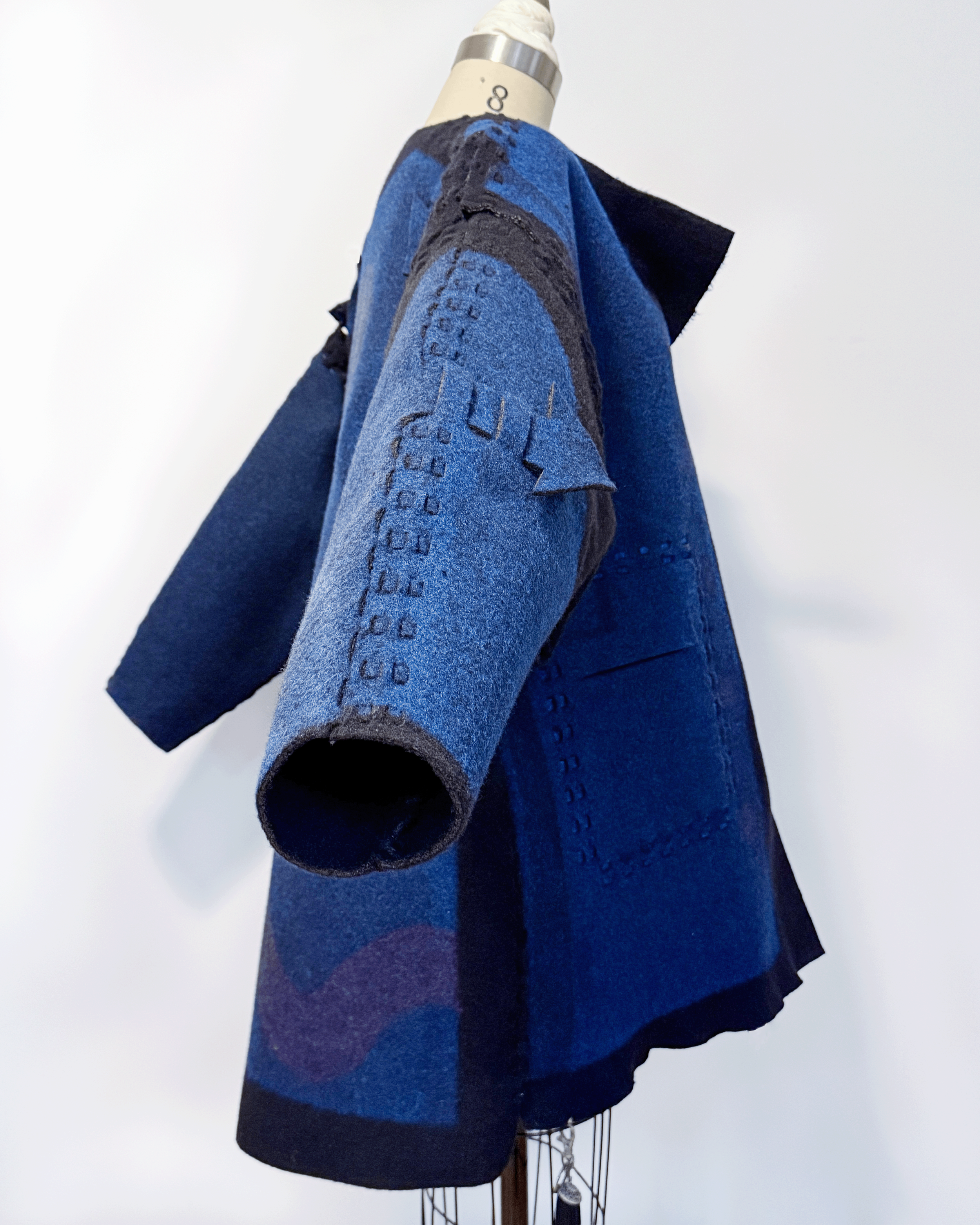
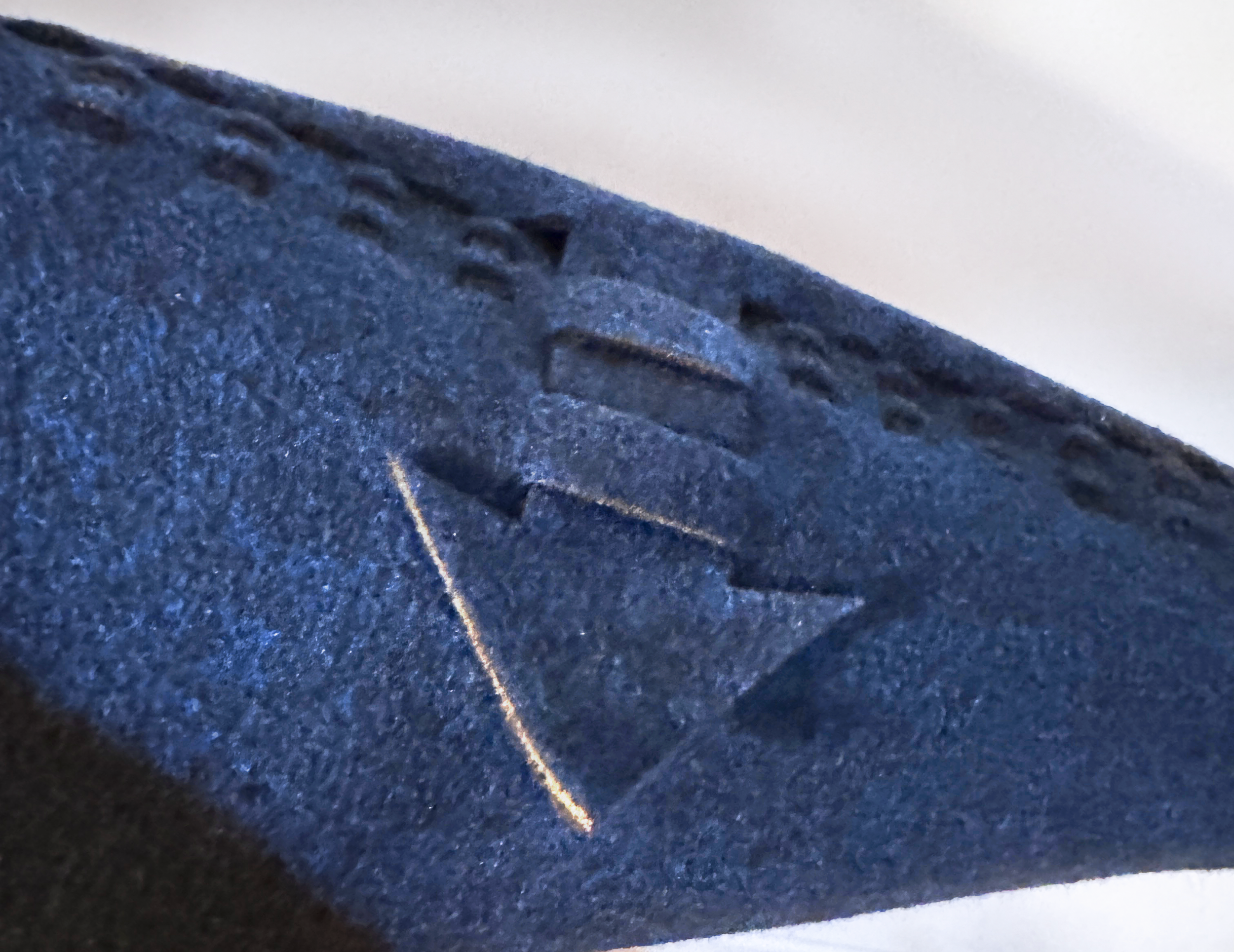
Drawing on the visual language of paper dolls as both structure and symbol, the project examines fashion’s cycles of use, idealization, disposability, and exchange. Oversized arrow-shaped tabs make the garment’s construction visibly legible while reinforcing ideas of interchangeability, modularity, and transformation.
approach
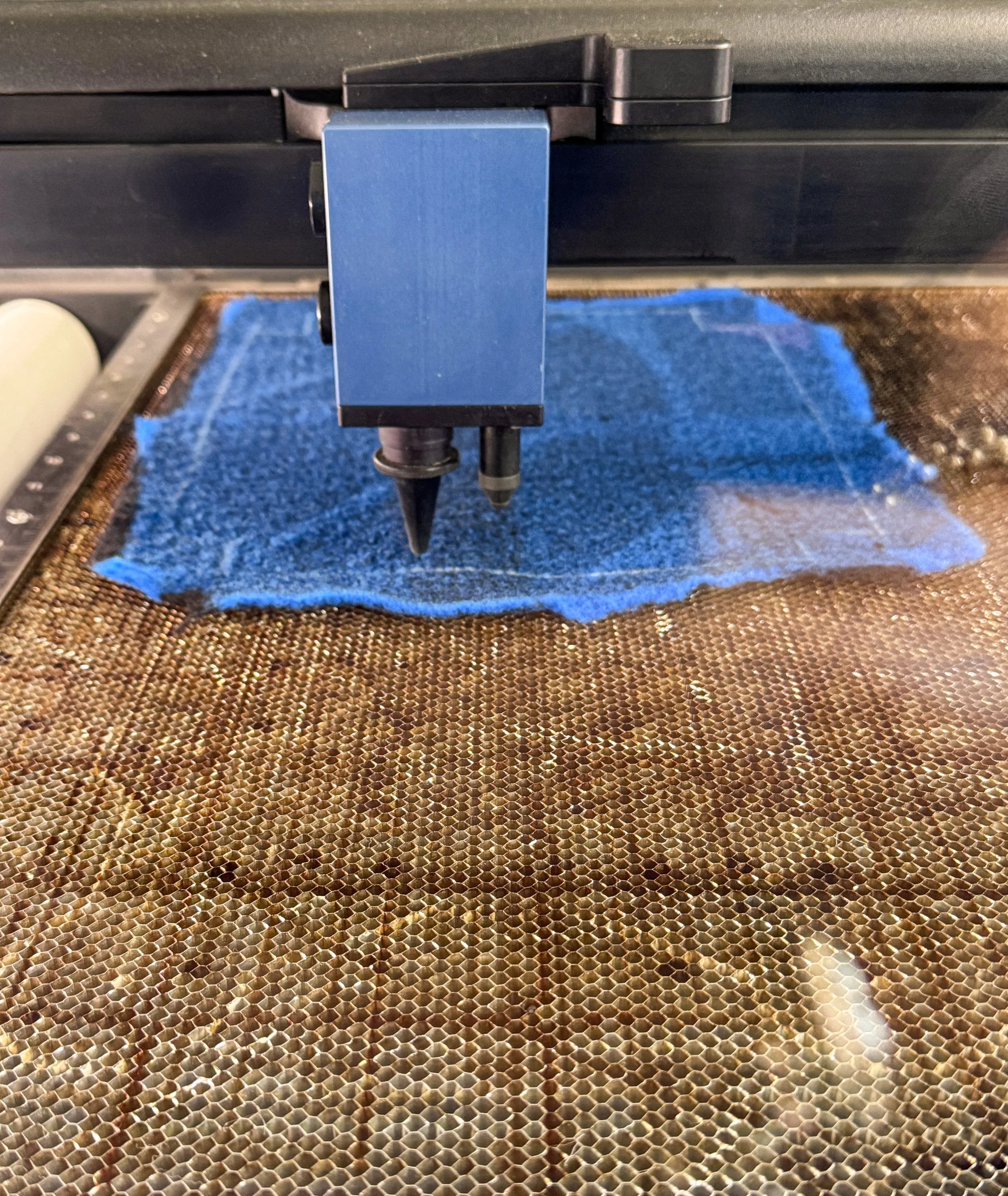
The project uses a research-through-design methodology in which iterative making, material testing, and reflective analysis function as the primary research activities. Mechanically felted panels were produced using a FeltLoom, then digitally drafted and laser-cut into modular pattern pieces sized to minimize waste. Adapted from Post Couture Collective’s interlocking system, the garment employs precision-cut tabs and slots that support assembly, disassembly, reconfiguration, and future material recovery.
methods
Mechanical felting / laser cutting / modular tab-and-slot assembly / research-through-design / textile waste reuse
significance
Re-Assembled demonstrates how post-consumer textile waste can be re-engineered into a garment that is both functional and speculative. By eliminating sewing thread and fasteners, the project simplifies disassembly and foregrounds design-for-disassembly as both a technical and aesthetic strategy. The work also challenges dominant assumptions about waste, quality, authorship, and desirability by treating discarded garments not as endpoints, but as sites of creative and intellectual value.
The project is also informed by feminist material culture and the history of paper dolls. By translating the paper doll’s flat, interchangeable, and idealized logic into a contemporary modular garment system, the coat reclaims modularity as a strategy of adaptability, care, and critique rather than passive consumption and disposability.
Although the coat stands as an independent creative research artifact, it also connects to my broader work on circular textile systems. Within the larger Re-Assembled Systems / campus circularity research, the coat functions as one example of how textile waste can be transformed through material experimentation, design-for-disassembly, and research-led making.
recognition / outputs
2026 Betty Kirke Excellence in Research Award, Costume Society of America
Juried creative work / exhibition abstract: Re-Assembled: The Paper Doll Coat — A Modular No-Sew Coat from Textile Waste
Research presentation context: Re-Assembled Systems: Circular Design Research within a University Campus Textile Ecosystem