upcycled design practice research
What can textile scraps reveal about the upcycled design process?
As part of the Upcycled Gear Fashion Show, this research project examined the upcycled design process through an interdisciplinary mixed-methods approach. Working with the participating designers, the study combined surveys, reflections, visual documentation, and textile waste analysis to better understand how different upcycling approaches shape material use and waste generation.
overview
This research component emerged from a simple but important question: what can the scraps tell us? Rather than focusing only on the finished looks, the study examined the leftover materials generated through design and making. It asked whether the characteristics, quantity, and types of scraps could offer insight into the upcycling process itself.
The project explored questions such as: What are the characteristics of the scraps? Can they be categorized? How much was left over from each designer? Was waste generation a consideration in the design process? Are there correlations between the amount and type of scraps and particular upcycling approaches, such as patchwork, deconstruction/reconstruction, or knitting?
approach
The research design was interdisciplinary and used mixed methods. Data collection included pre- and post-surveys with participating designers, reflections, field notes, photo and video documentation, material characterization, and direct observation.
All materials selected by the designers for their upcycled outfits were documented through itemized records, garment details, photographs, and weighing. Designers completed one survey before beginning their design process and a follow-up survey after completing their garment for the runway show. They were also asked to document their process through notes, photos, and videos, and to retain all textile waste generated throughout design and production.
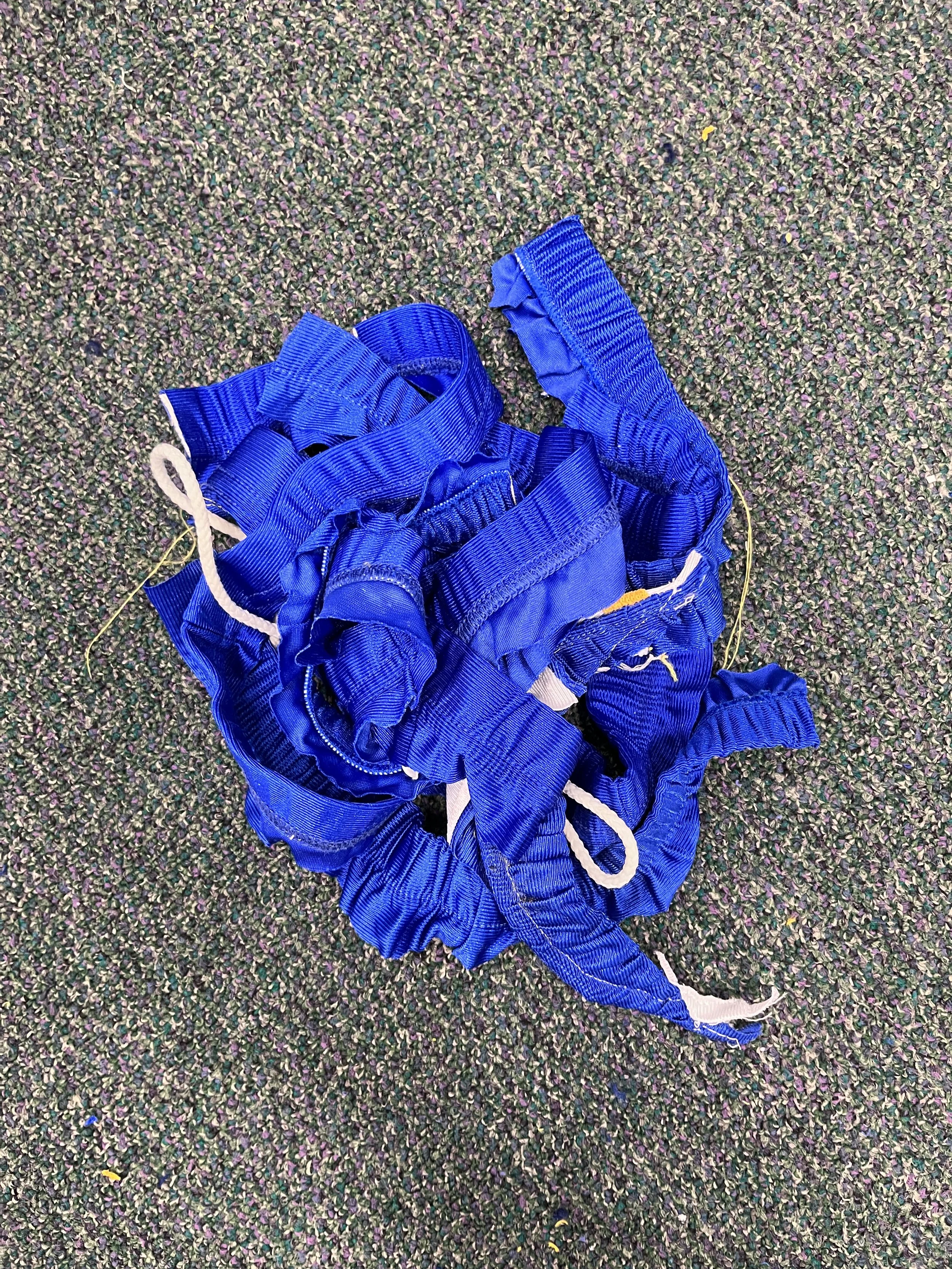
Once the materials were collected, all textile scraps and unused branded materials were subjected to detailed analysis. The scraps were physically examined, photographed, measured, and weighed. They were then sorted into categories such as garments with voids, medium-sized scraps, small-sized scraps, seams, trims, elastics, thread, and serger offcuts. Categorized scraps were weighed both by designer and by material category total.
To preserve analytical objectivity, qualitative survey data were not reviewed until after the textile waste analysis was complete. This allowed the physical evidence of the scraps to be examined first, without prior knowledge of designers’ intentions or explanations.
preliminary findings
This study is ongoing, but initial results suggest that there are identifiable upcycling approaches, emerging best practices, and correlations between particular design methods and the type and volume of textile waste generated.
Early observations indicate that some upcycling approaches yield less waste than others, and that certain methods create more predictable scrap profiles. At the same time, the project also revealed how the time constraints of the runway show shaped design behavior, sometimes producing deviations from participants’ typical design practices. These constraints are being taken into account as analysis continues.
More broadly, the study suggests that textile scraps are not simply byproducts. They can function as evidence of design decision-making, offering a way to examine upcycling not only as a creative outcome, but as a material process.