upcycled gear exhibit
Extending the project beyond the runway into a public-facing exploration through display, interpretation, and material reuse
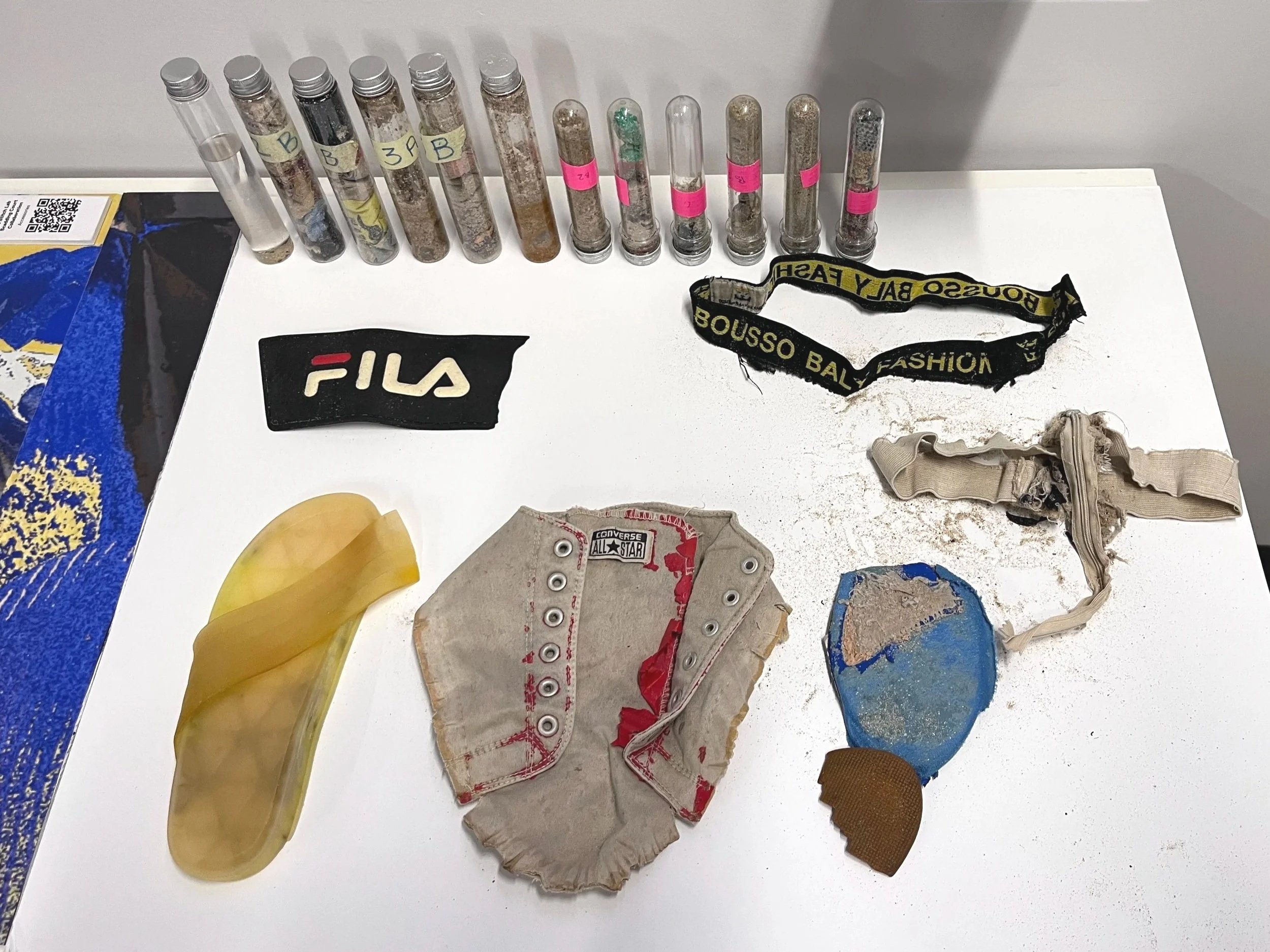
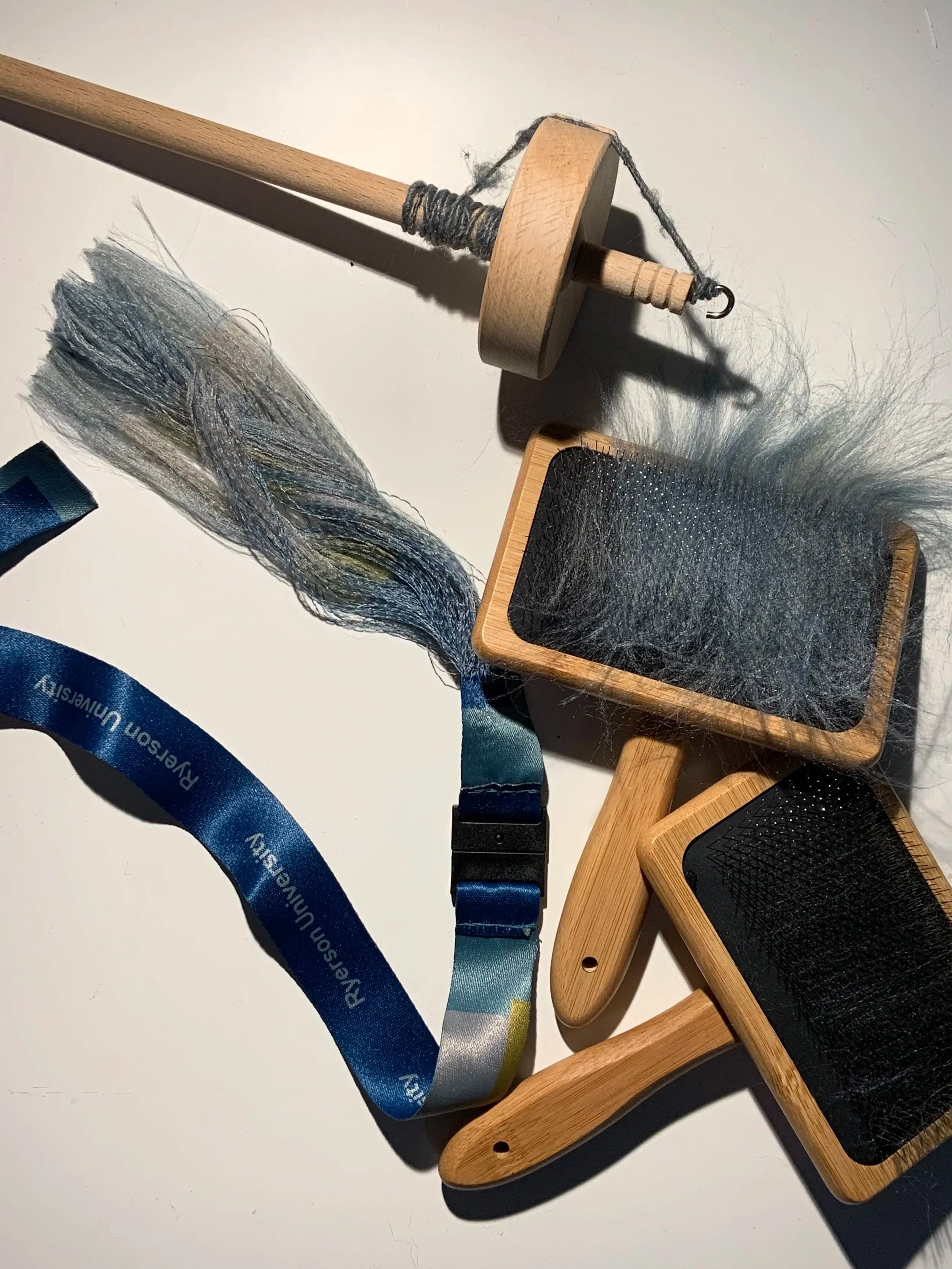
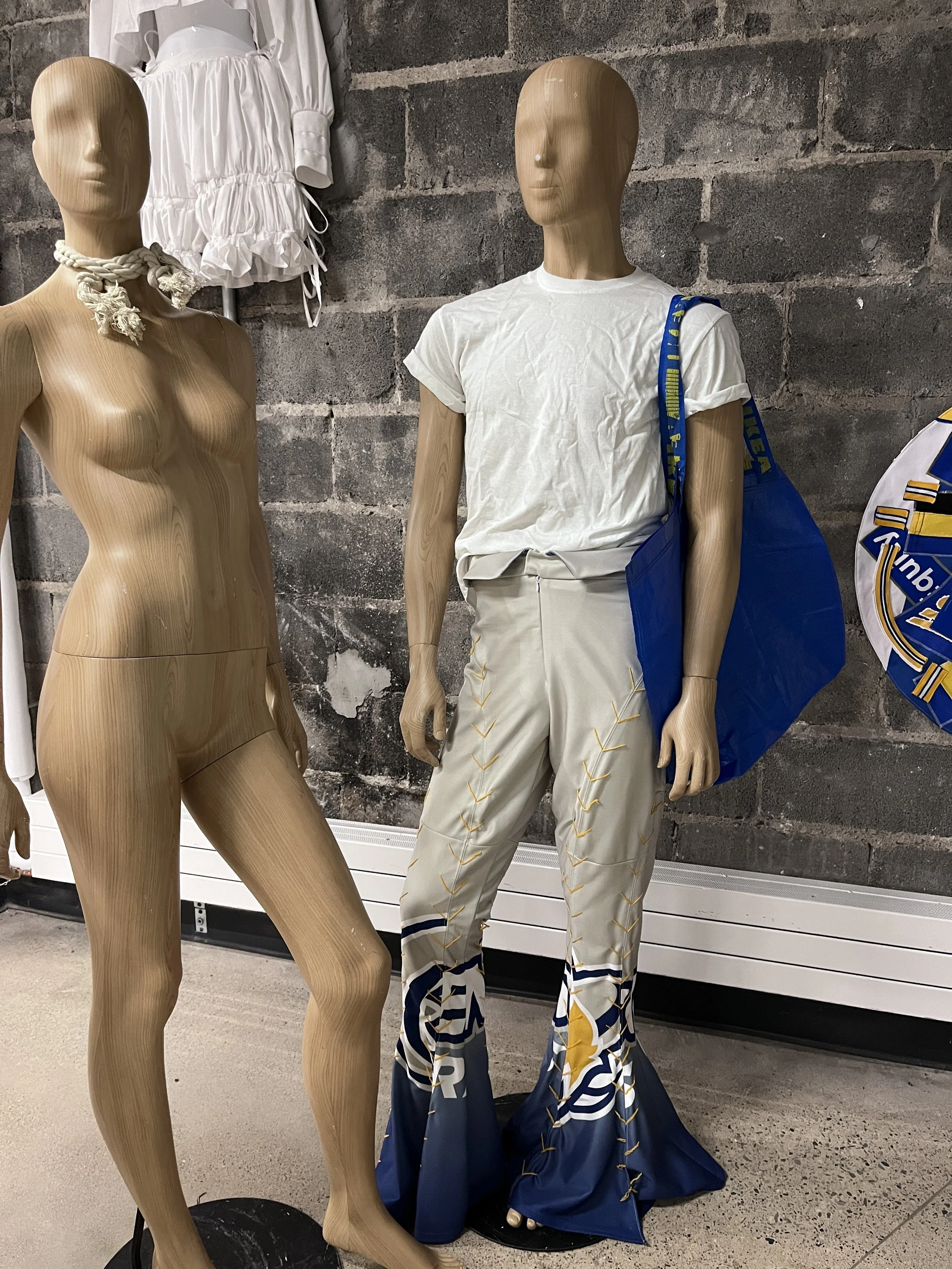
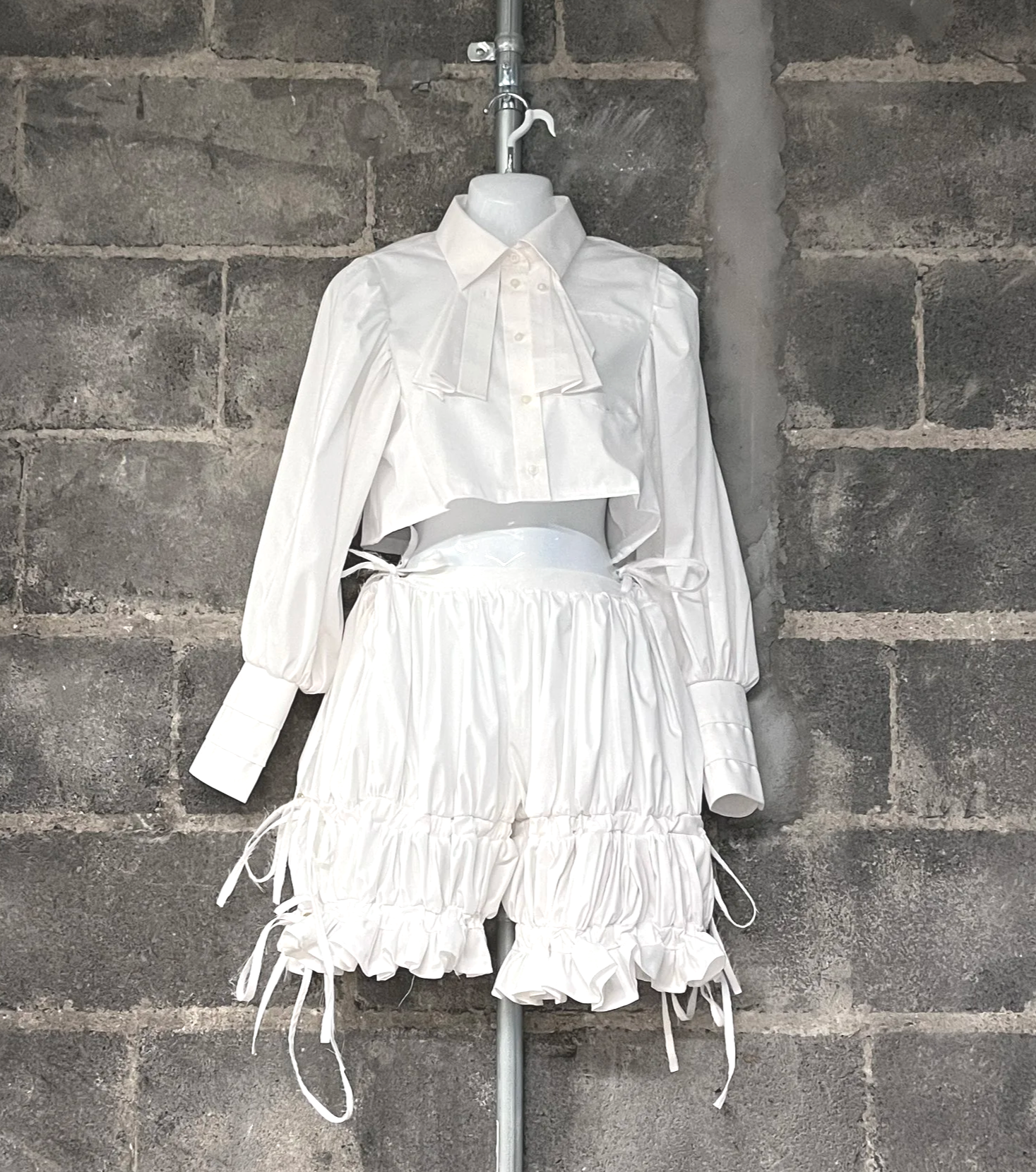
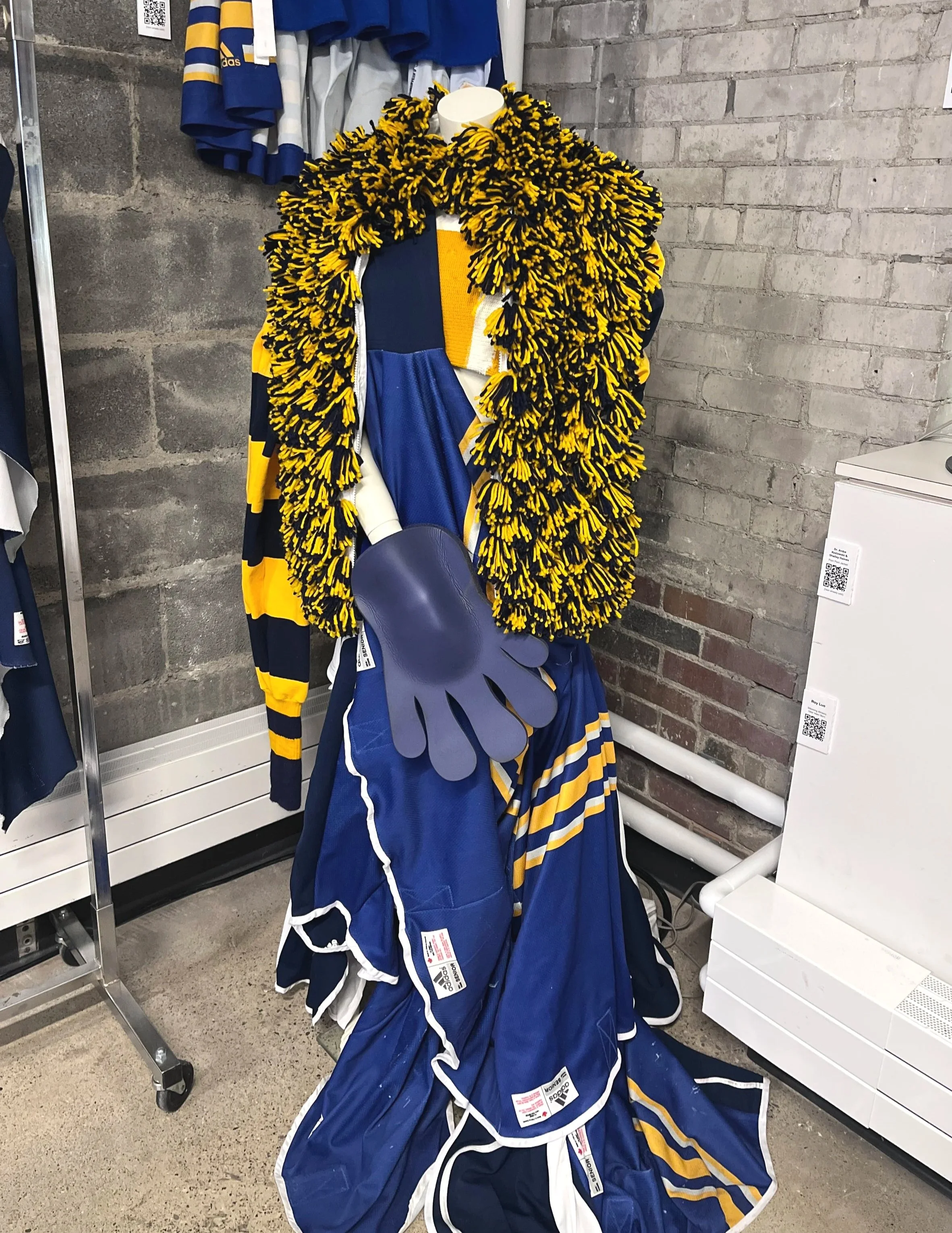
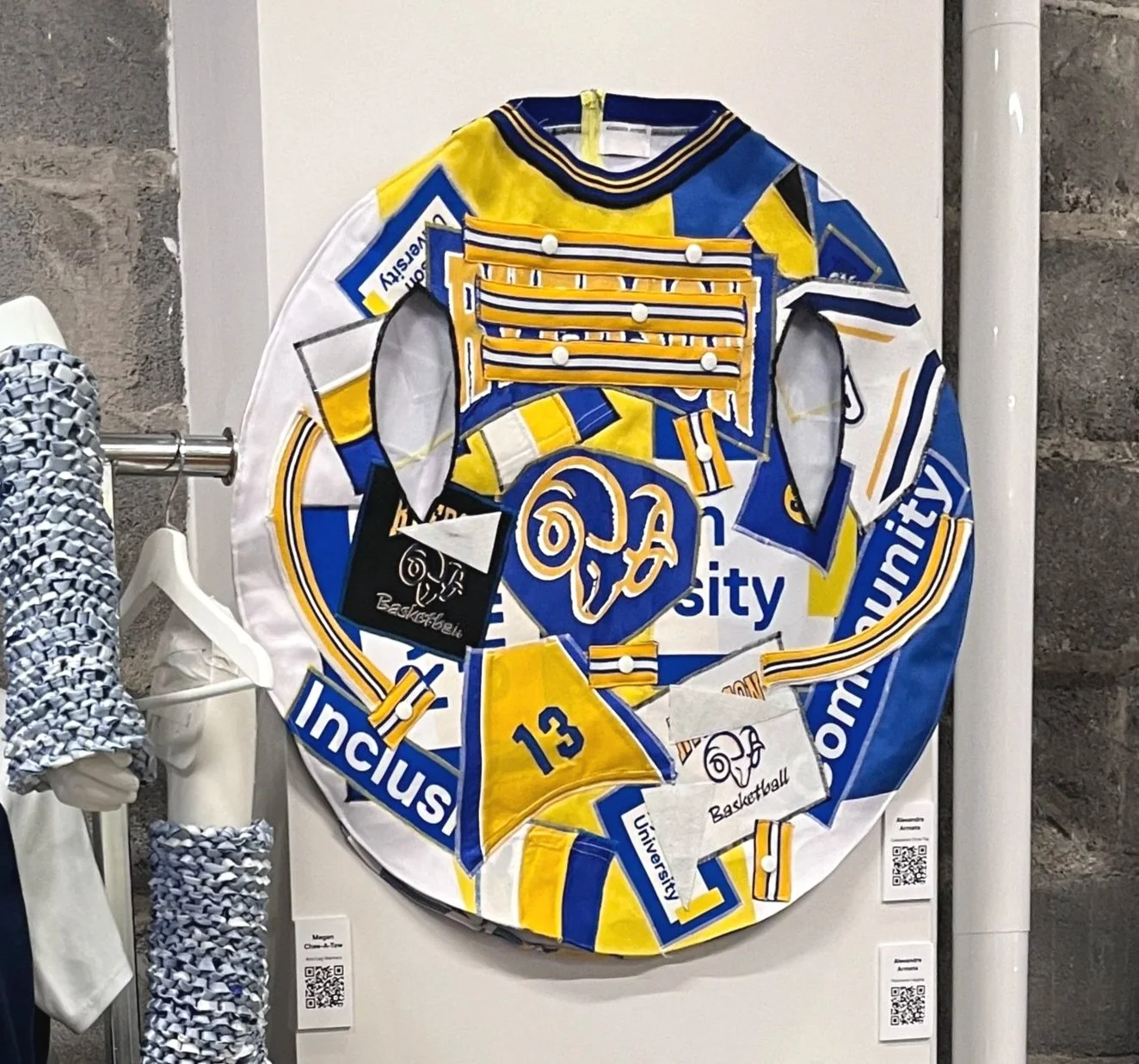
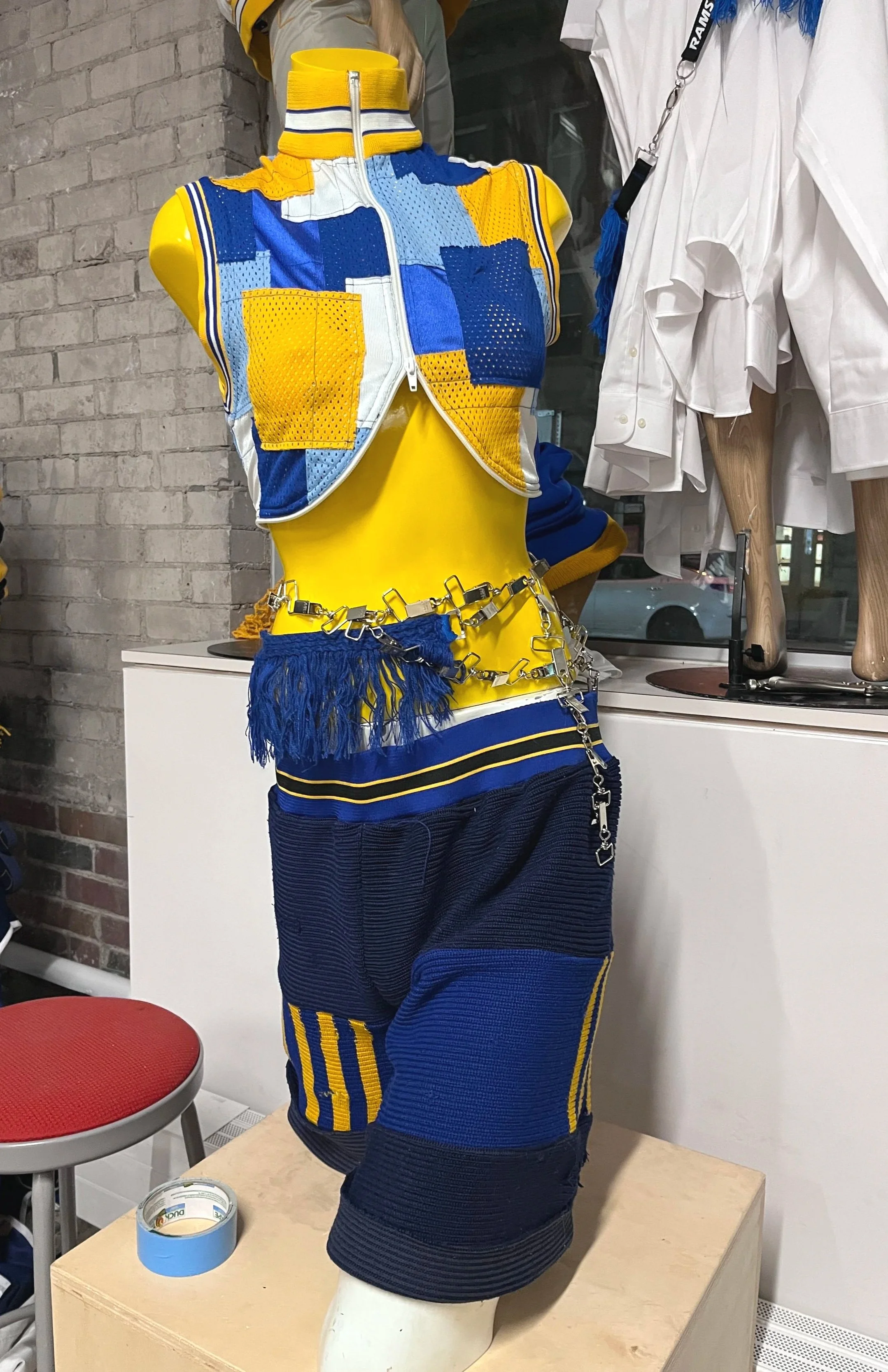
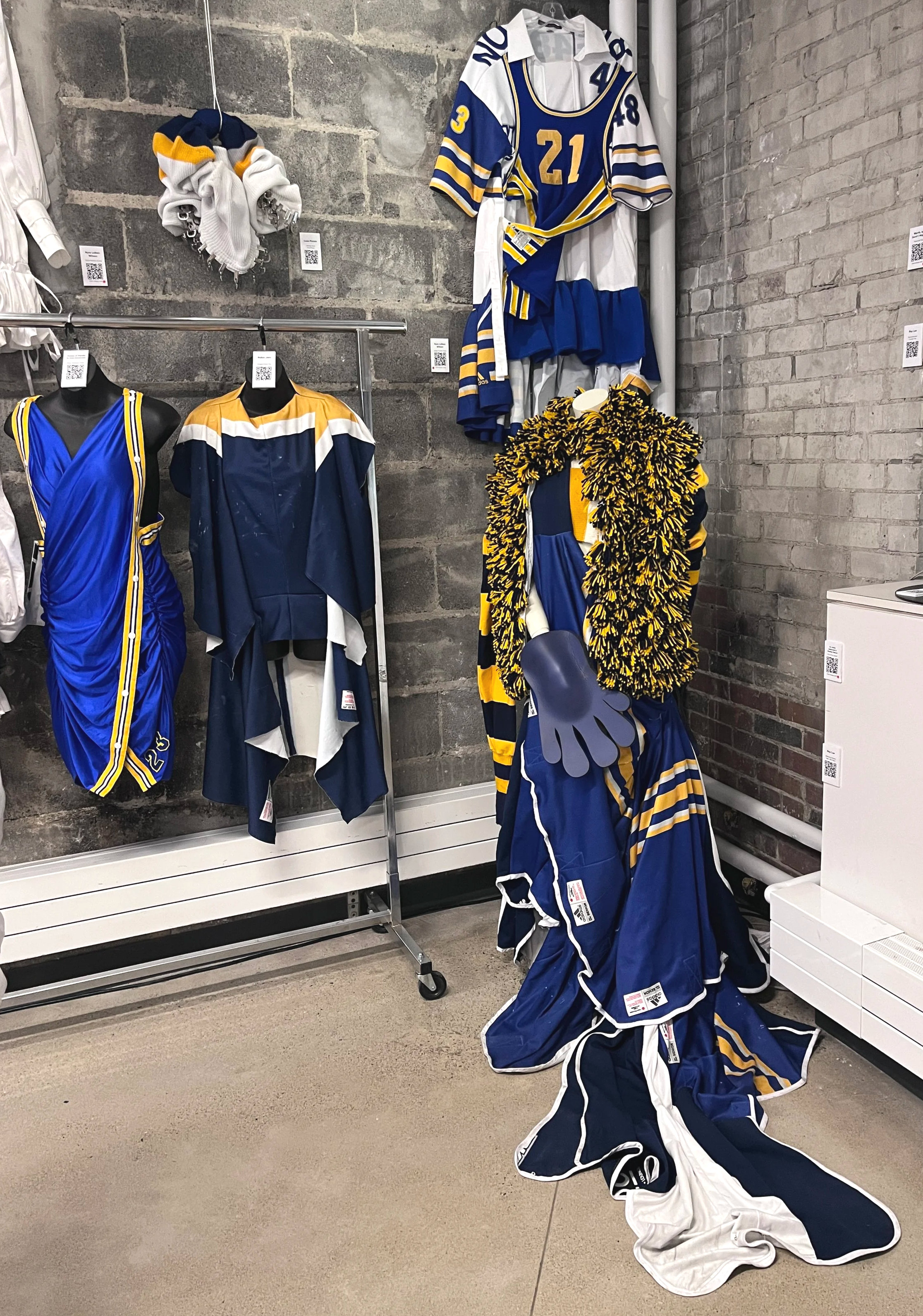
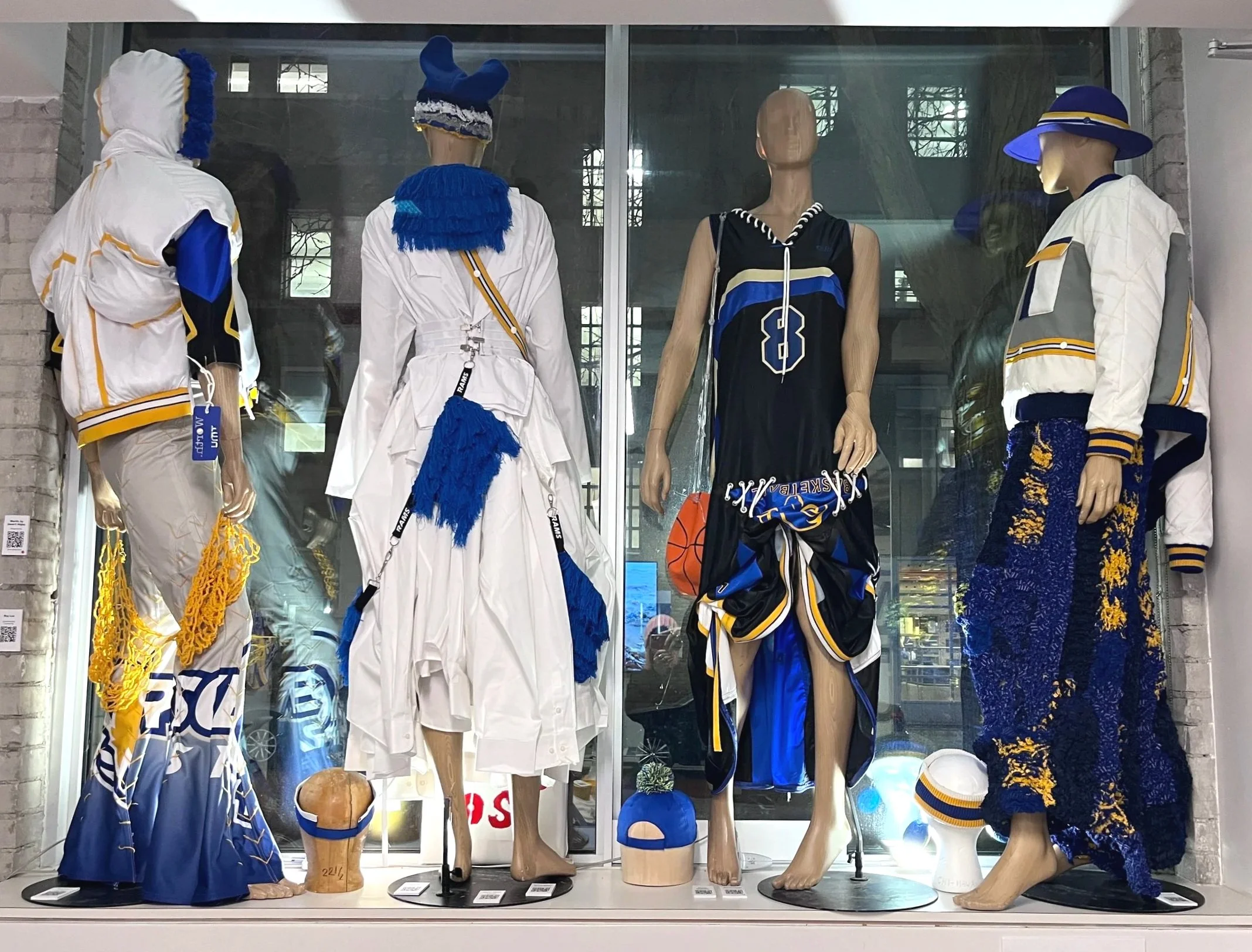
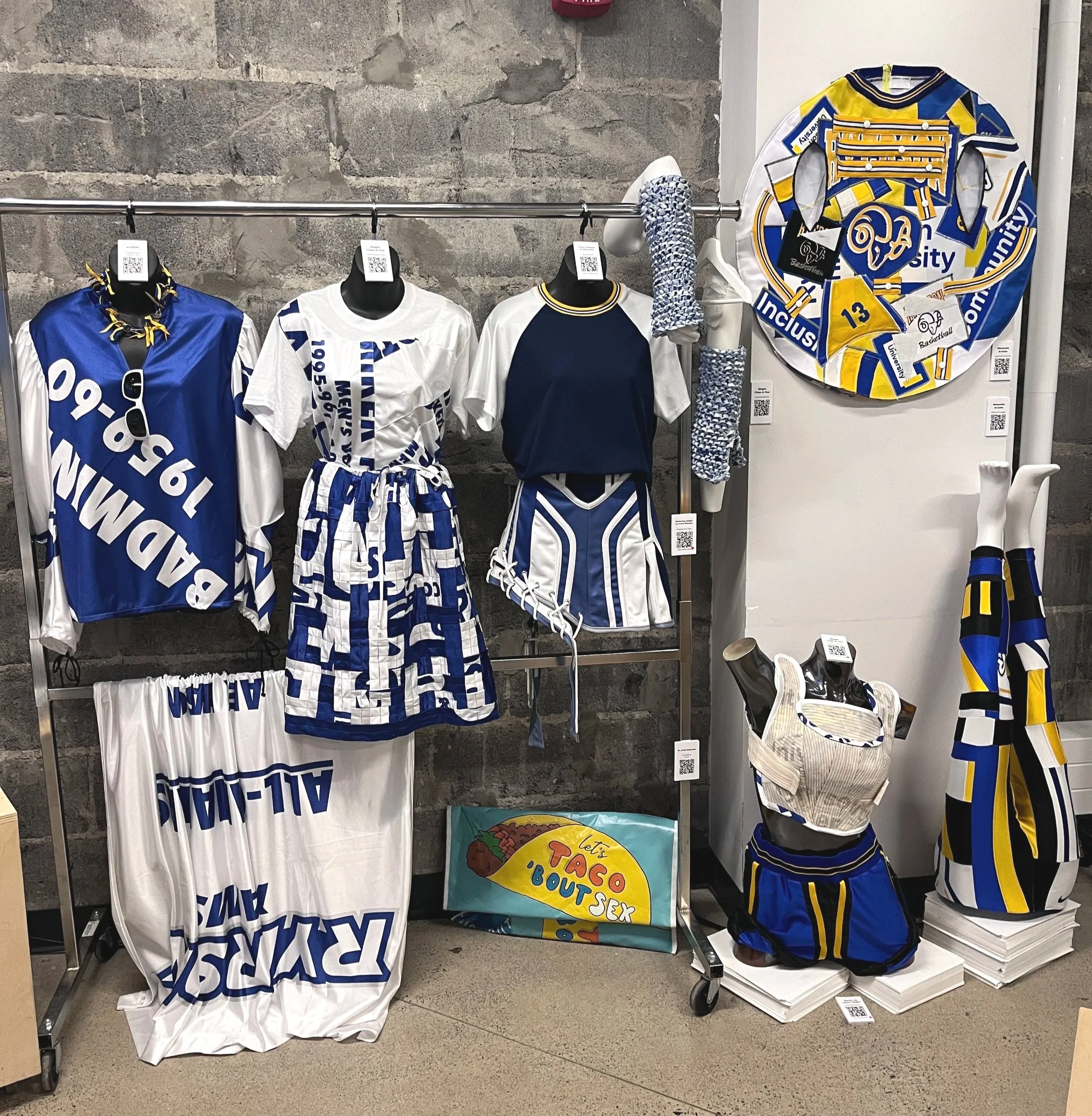
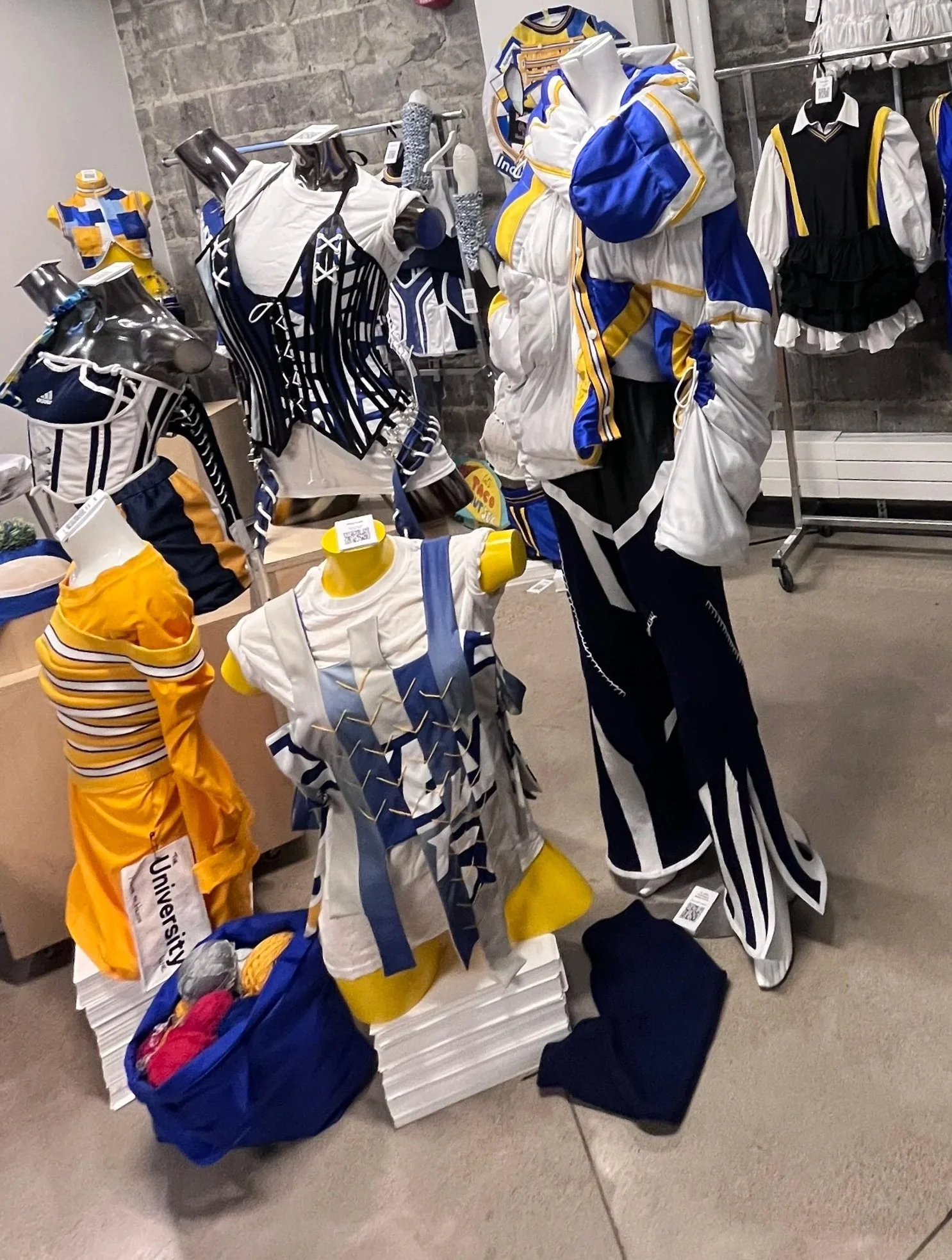
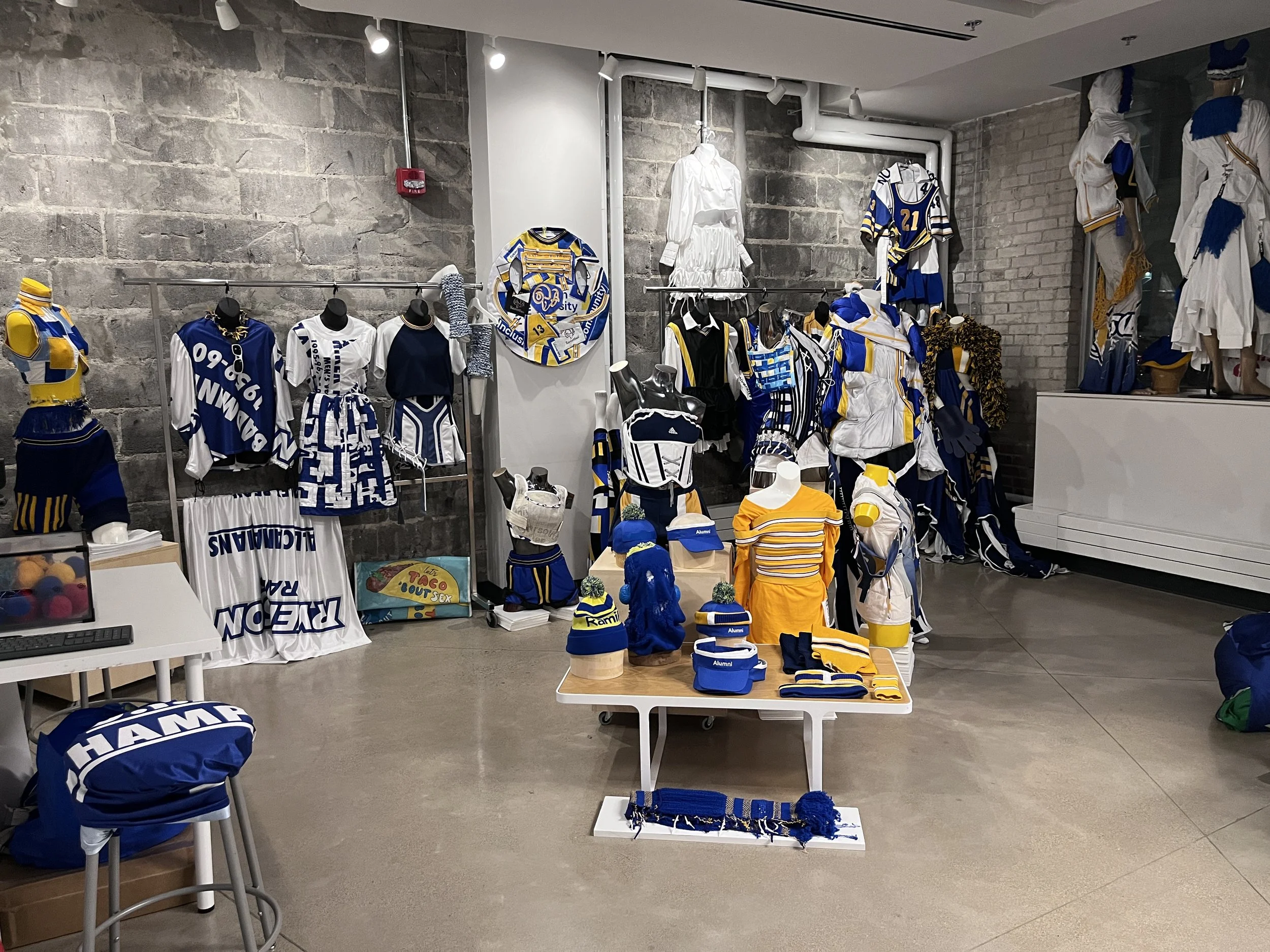
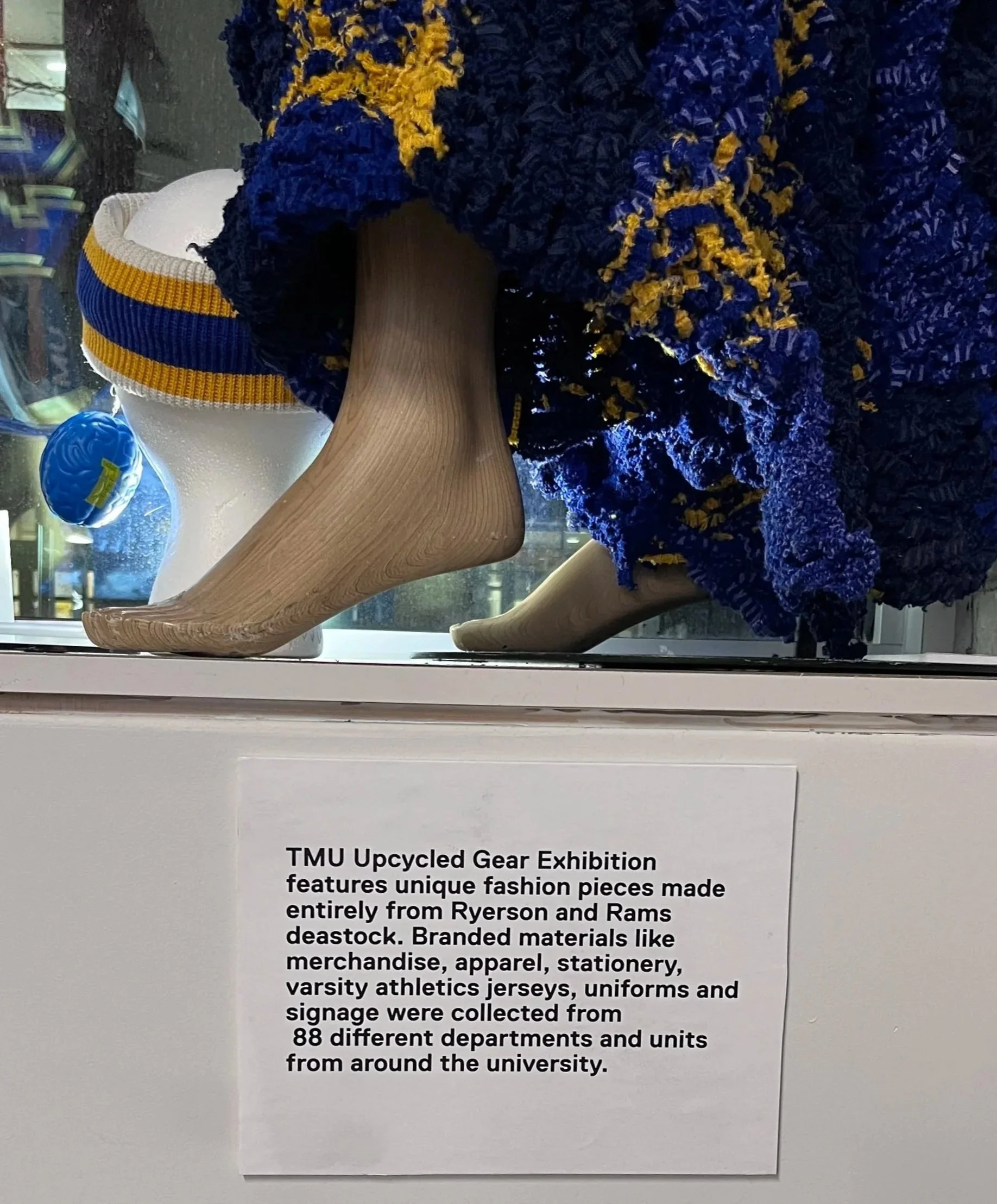
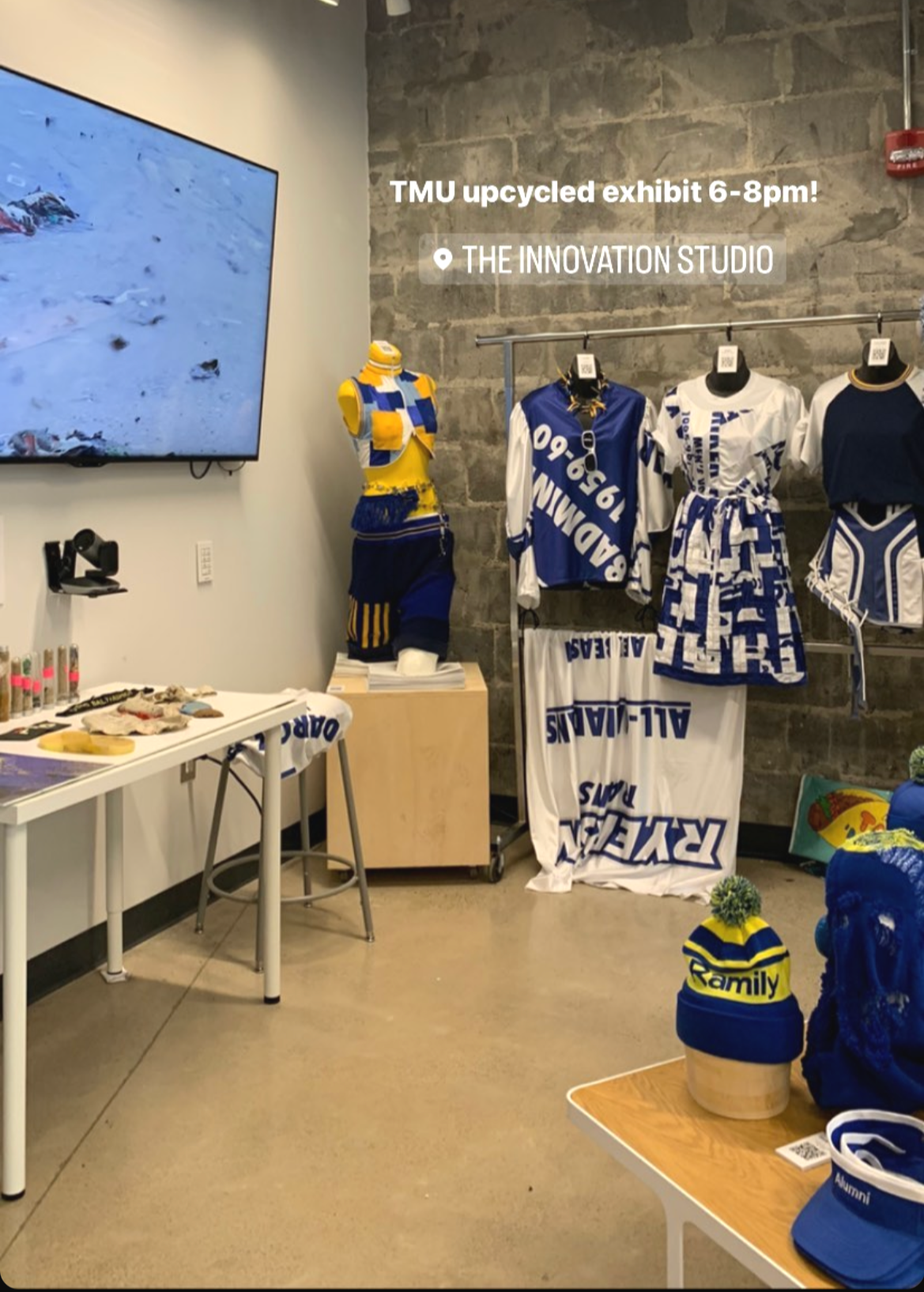
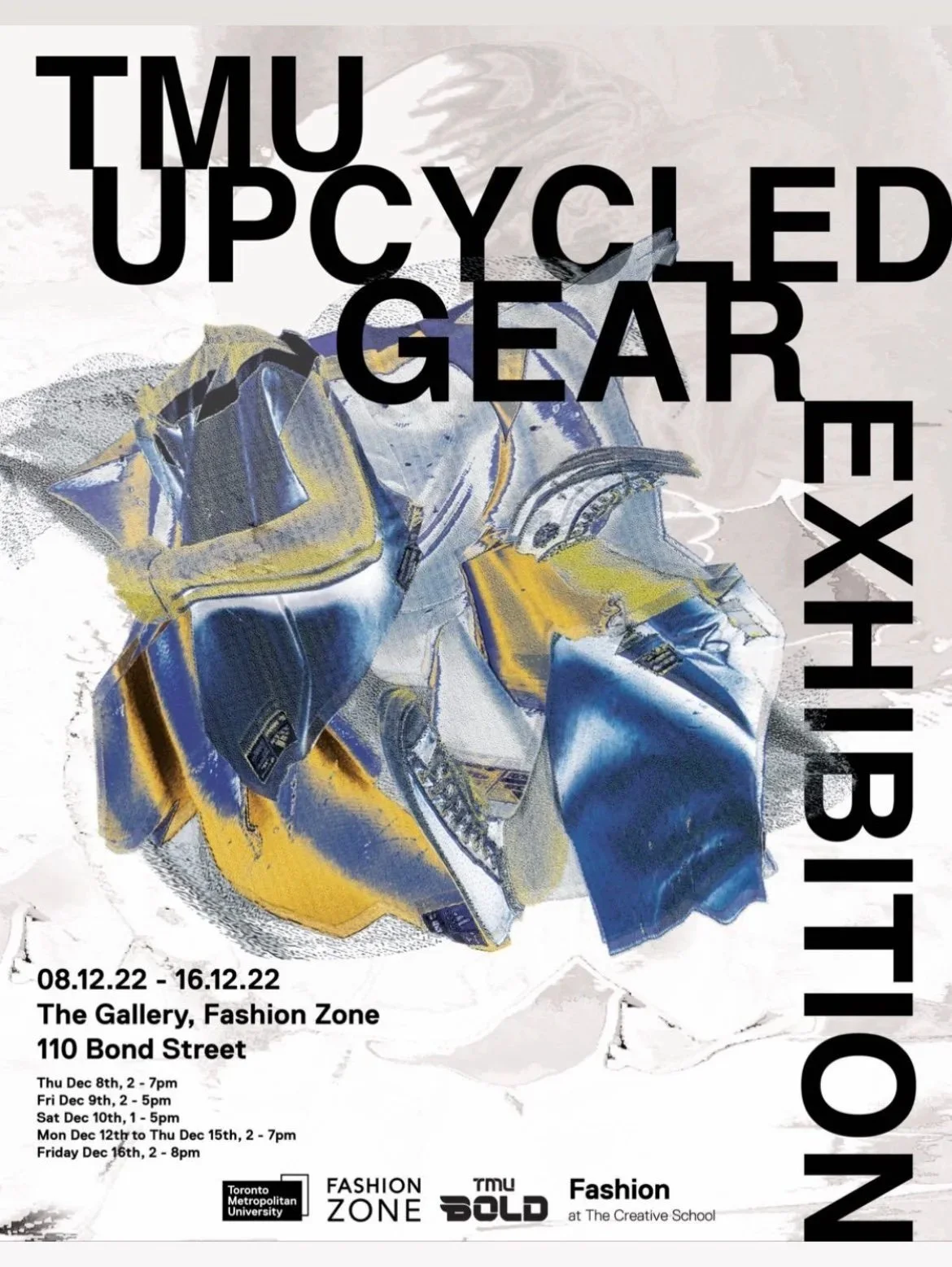
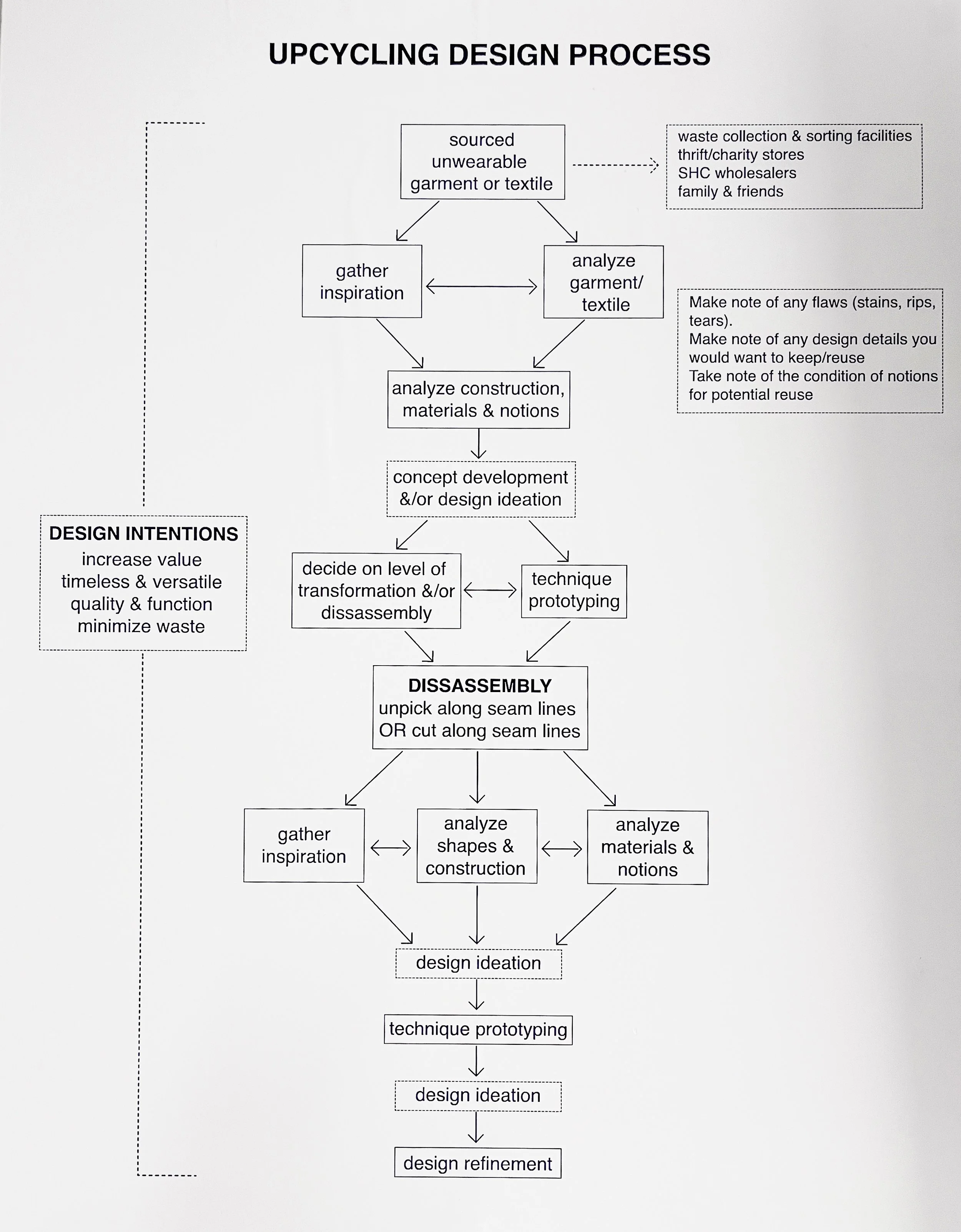
Following the Upcycled Gear Runway Show, the Upcycled Gear Exhibit extended the project into a public-facing format that highlighted the upcycled design process and created awareness about textile waste and its associated impacts. Rather than functioning only as documentation, the exhibit became another site of design intervention and material experimentation.
overview
As part of the broader TMU Branded Materials Transition Project, the exhibit functioned as both documentation and education. It provided a space to showcase selected garments, process materials, and supporting visual content in order to communicate how branded textile waste could be transformed through design.
The exhibit also highlighted the collaborative work of TMU Fashion students, alumni, and student-athletes, while reinforcing the project’s broader focus on circularity, reuse, and institutional material responsibility.
significance
The exhibit helped shift the project from a one-time runway event into a longer public conversation about textile waste, creative reuse, and circular design practice. By making the design process and the resulting garments visible in an exhibition format, it created another way for audiences to engage with the material consequences of institutional change and the possibilities of upcycling as both creative practice and sustainability intervention.
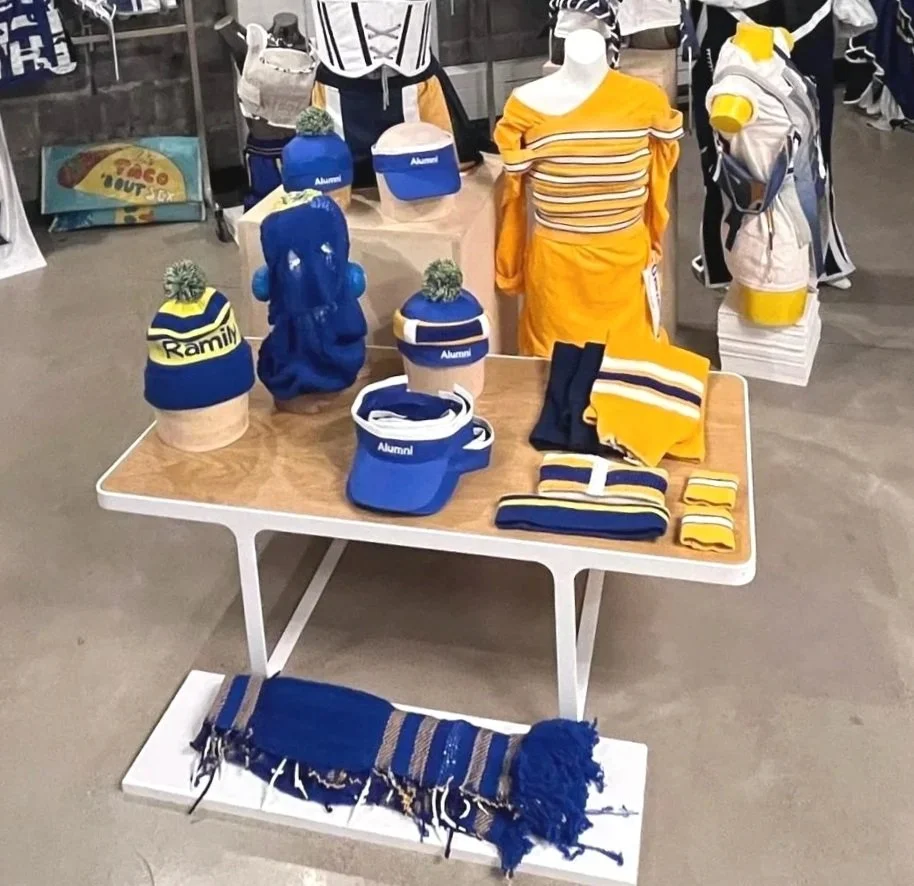
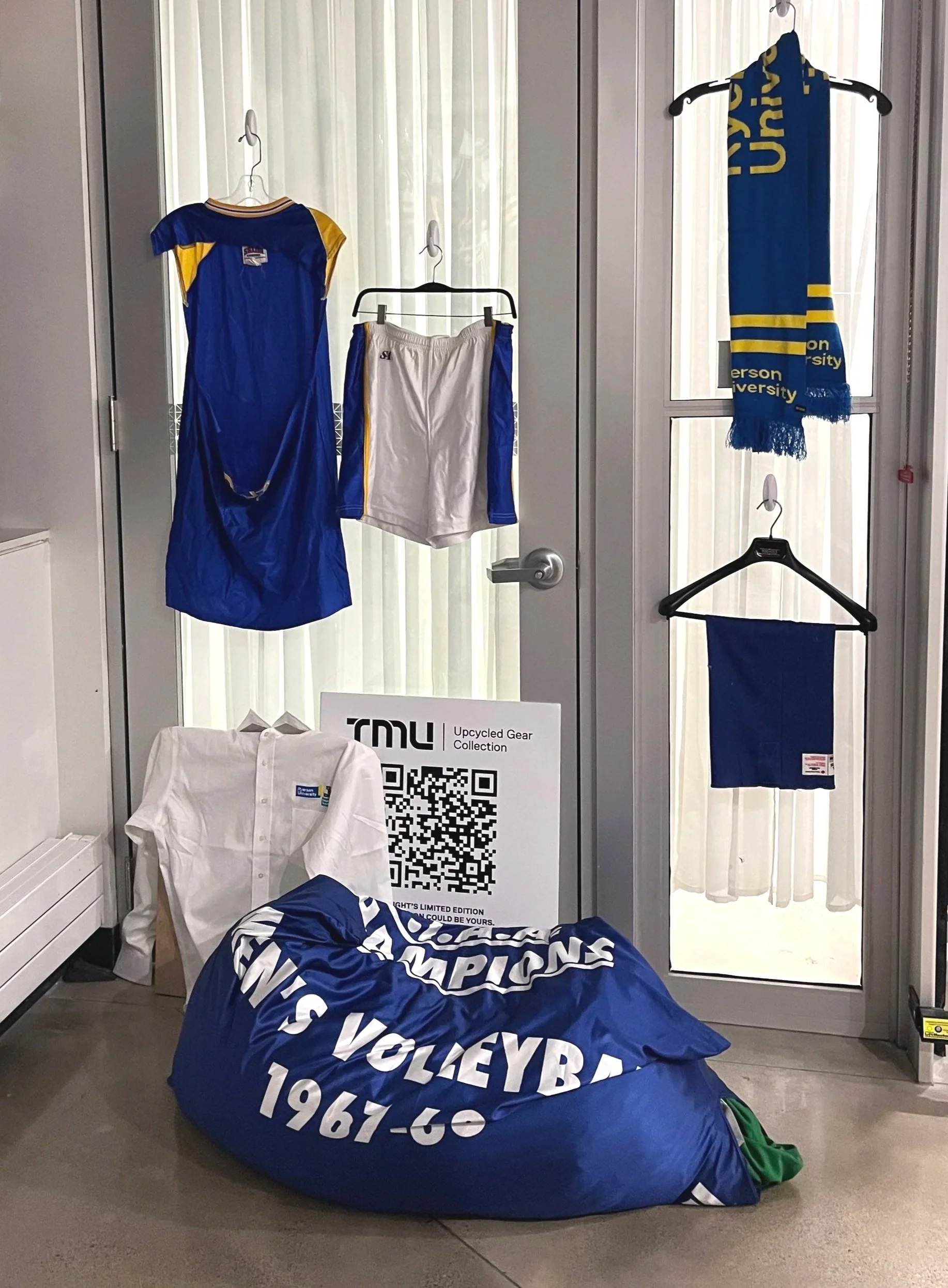
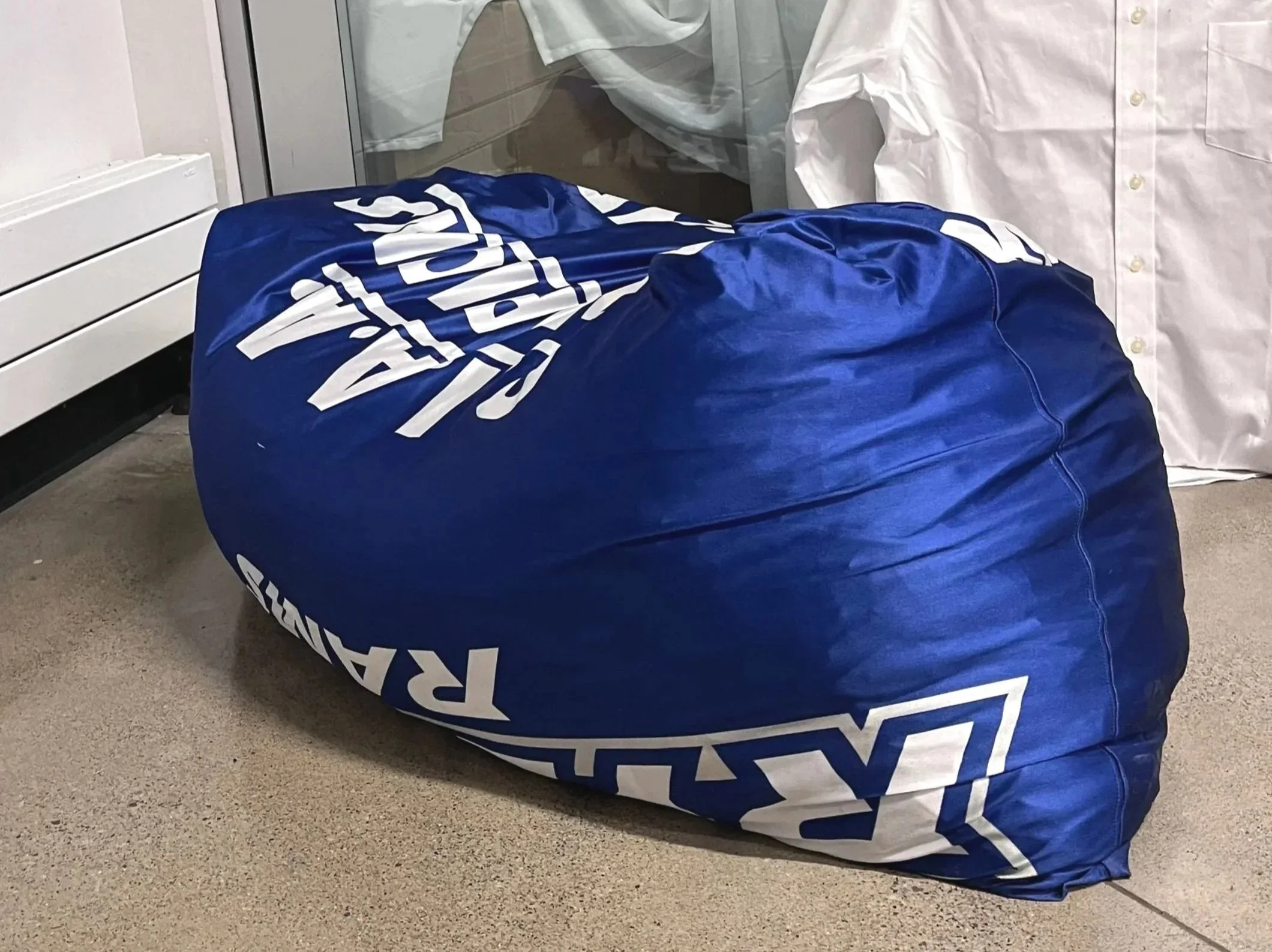
One of the most significant aspects of the exhibit was that its display environment followed the same circular logic as the garments themselves. Rather than purchasing new display materials, the exhibit relied on found items, materials put out for disposal, and elements made from branded textiles. Props, display tables, and other exhibition components were either scavenged, recovered, or constructed from existing materials already in circulation.
This approach extended the project beyond garment-making and into the spatial and interpretive design of the exhibit itself. It demonstrated that circularity could shape not only what was shown, but how it was shown. In this sense, the exhibit made visible a broader commitment to reuse and material responsibility by embedding circular thinking into the exhibition design, not just the fashion objects on display.
More broadly, the exhibit underscored the role of display and public interpretation in sustainability work. It showed that circular textile projects are not only about diversion and redesign, but also about storytelling, visibility, and the cultural work of making waste legible. The exhibit also helped turn the project from a one-time event into a longer public conversation about textile waste, institutional obsolescence, and the possibilities of upcycled design.