campus circular textile systems
How can sustainable design education be taken seriously while textiles are still being thrown into studio garbage bins?
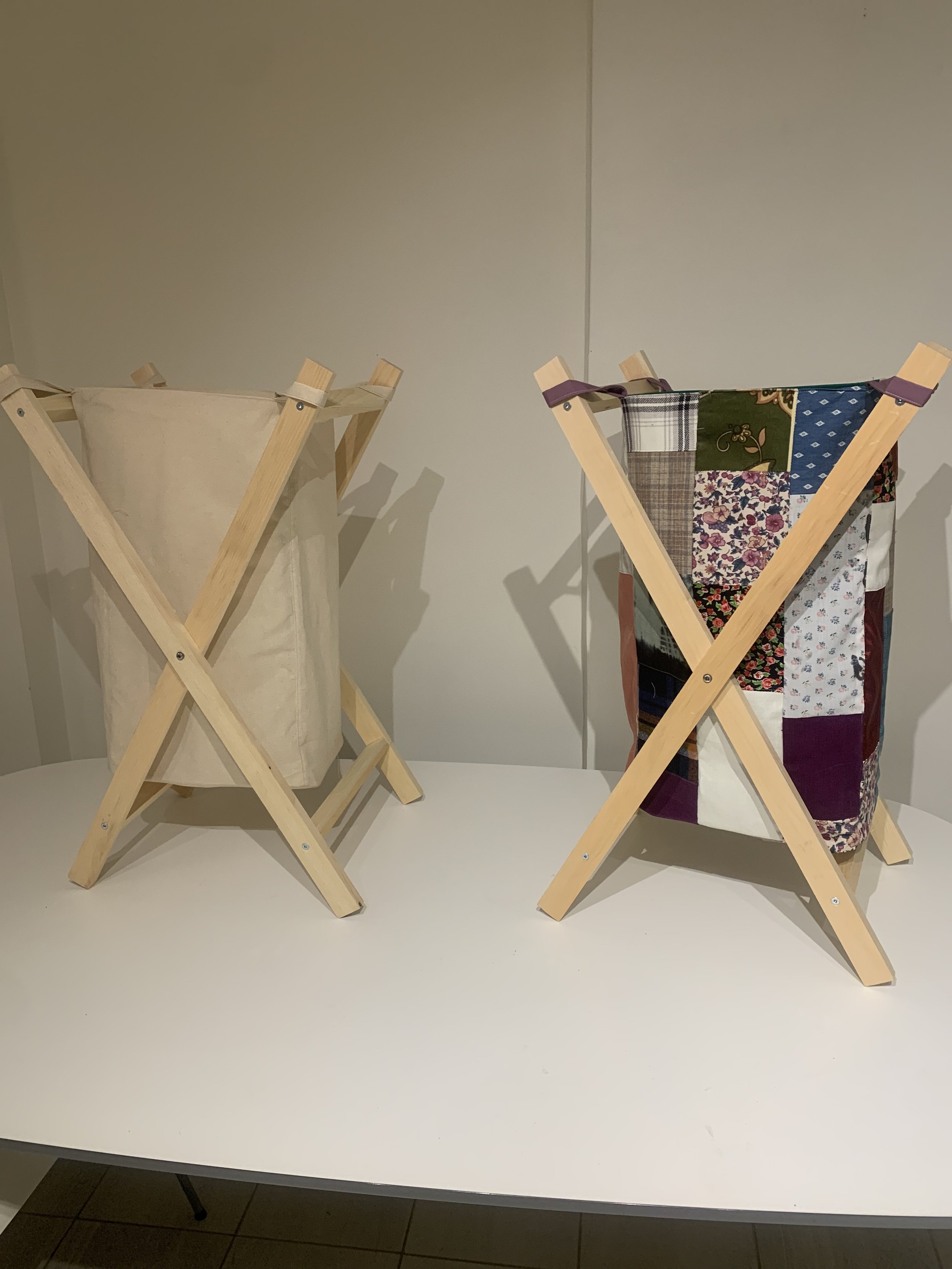
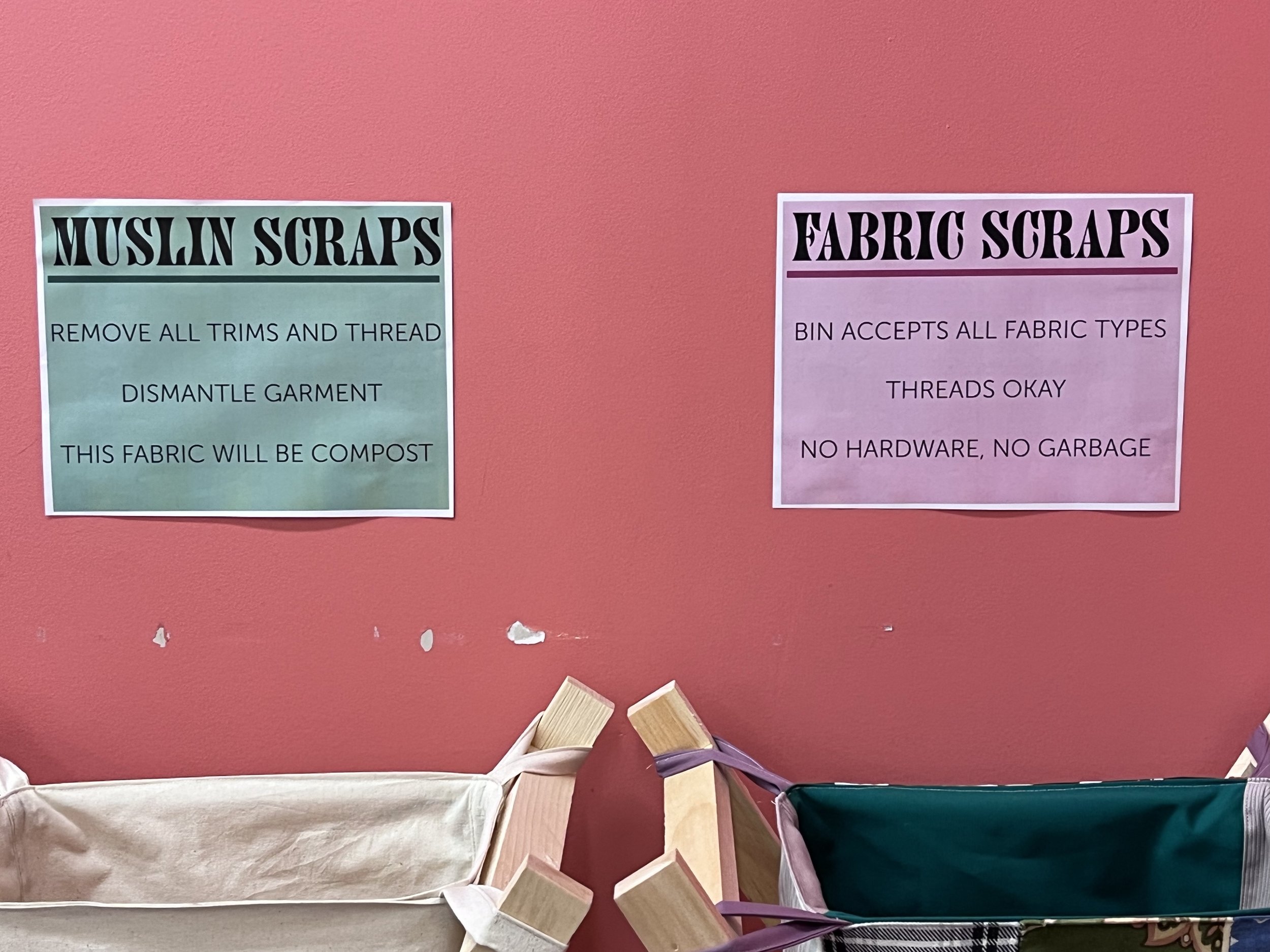
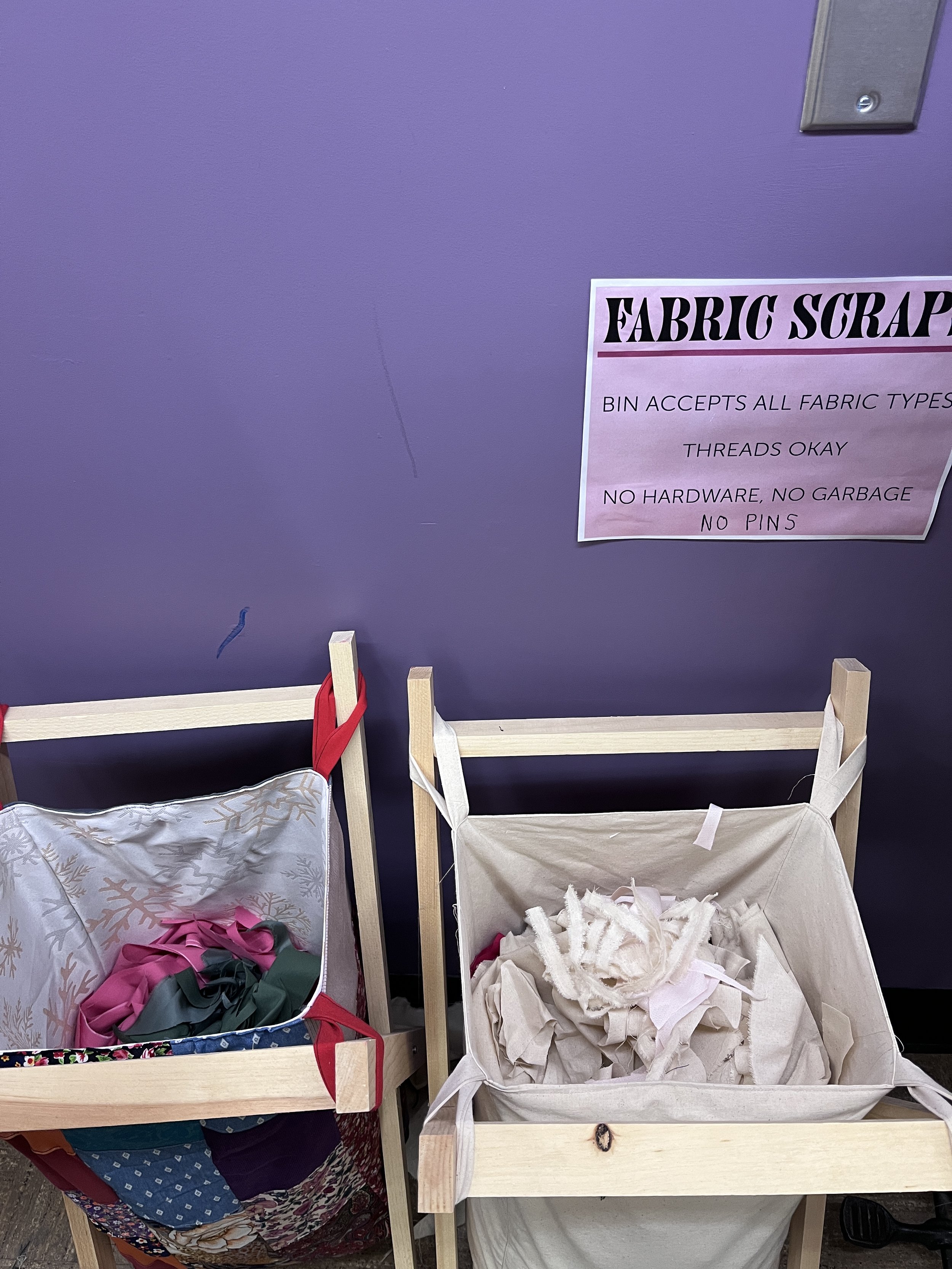
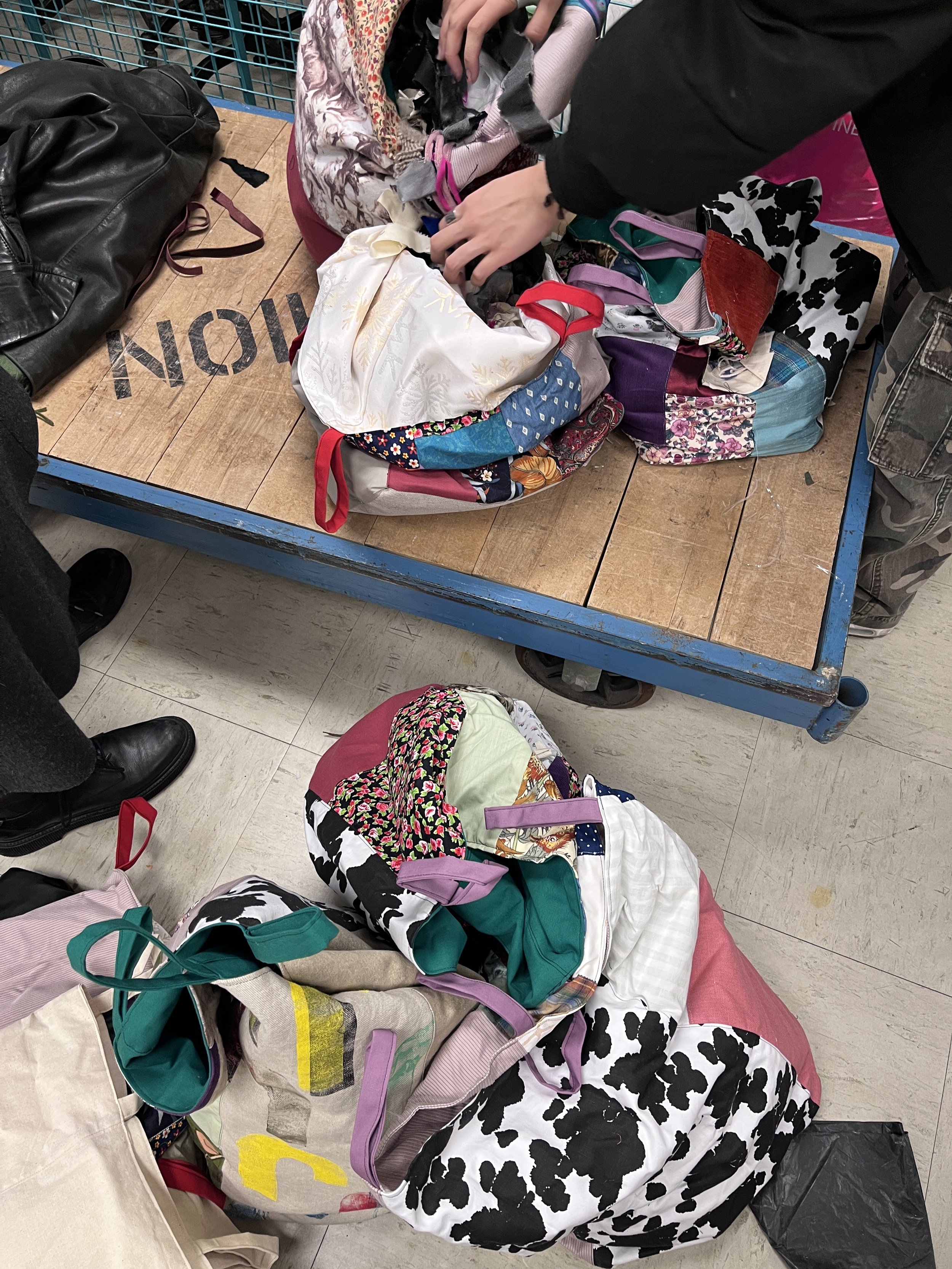
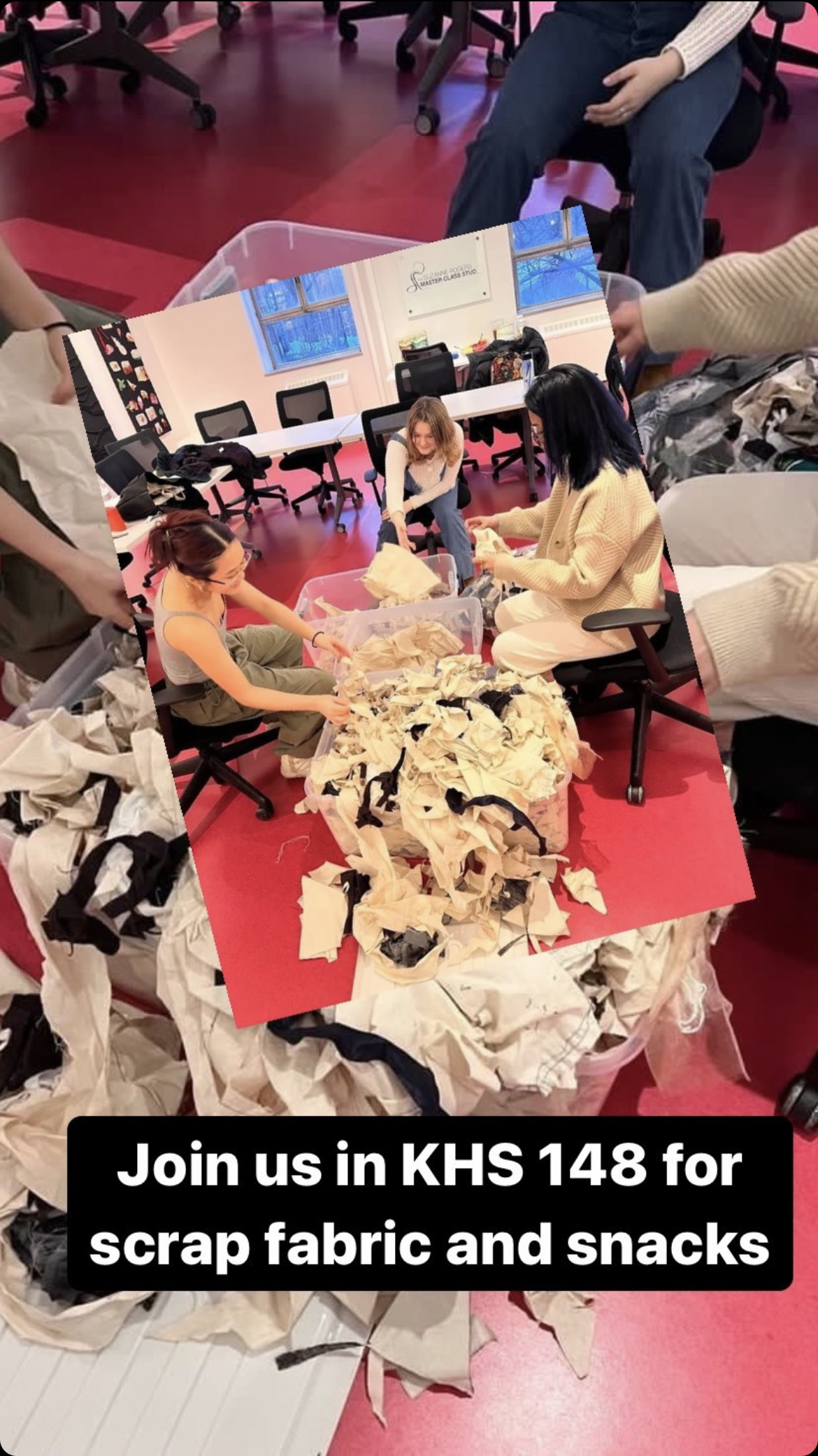
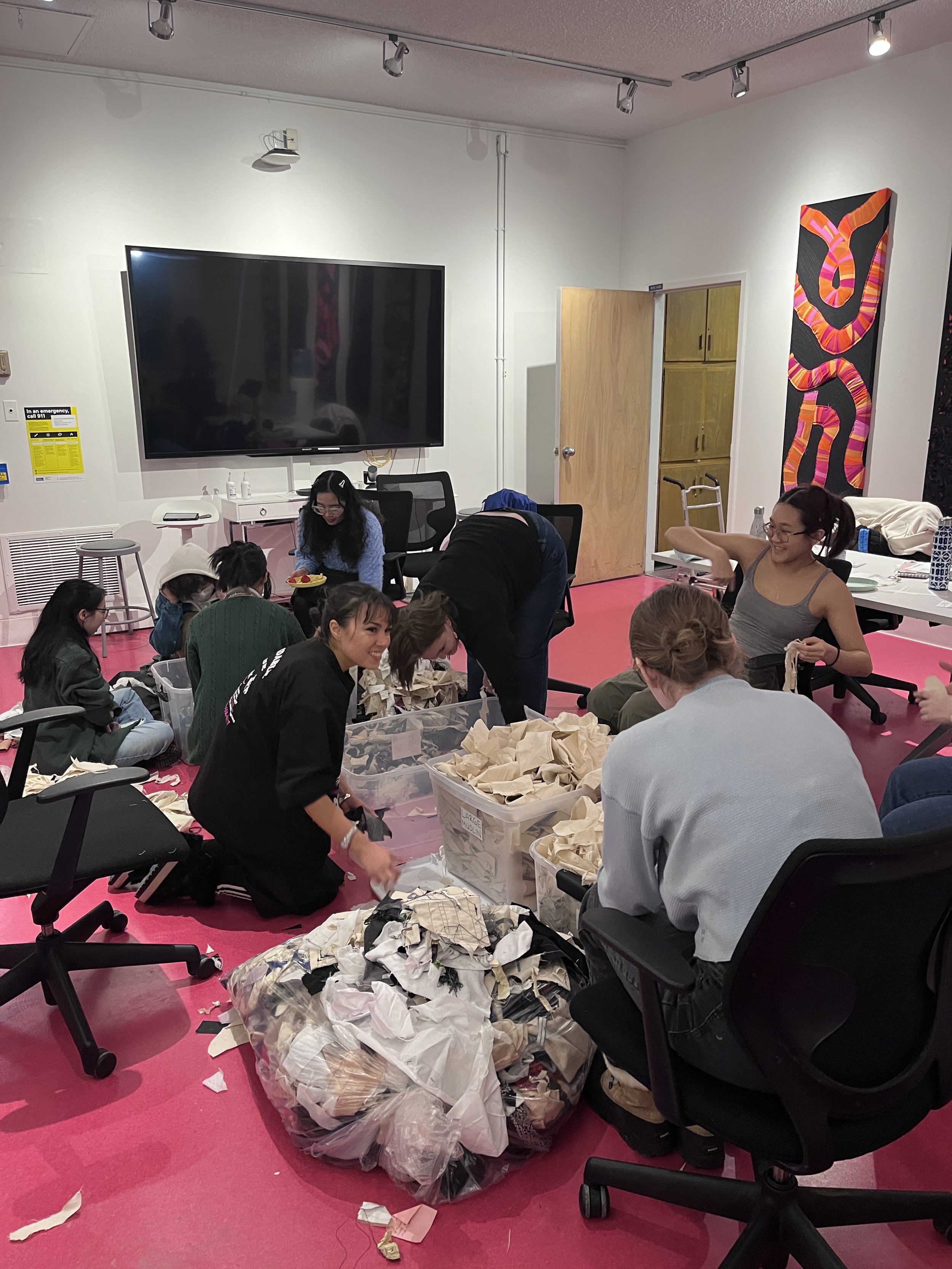
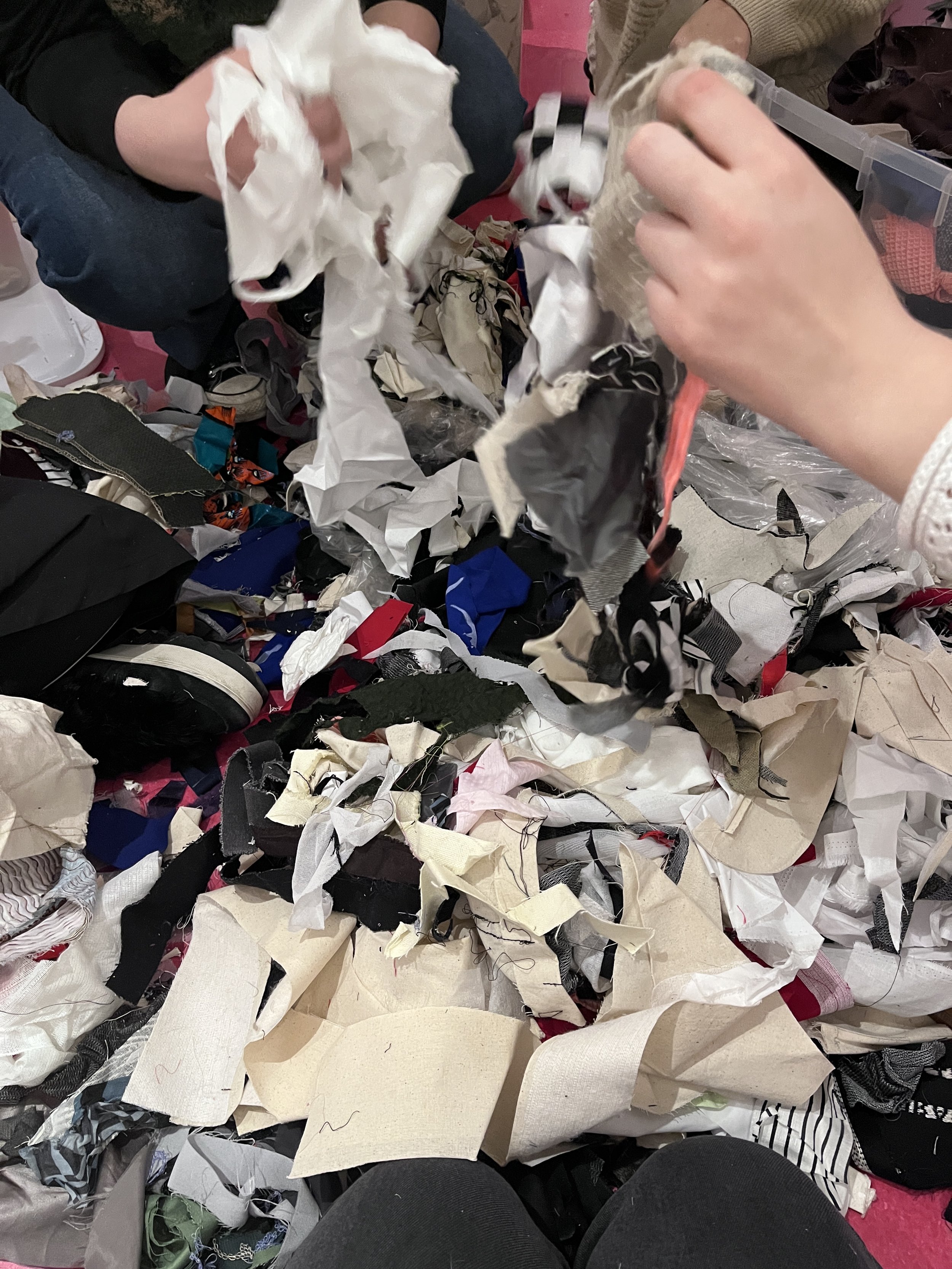
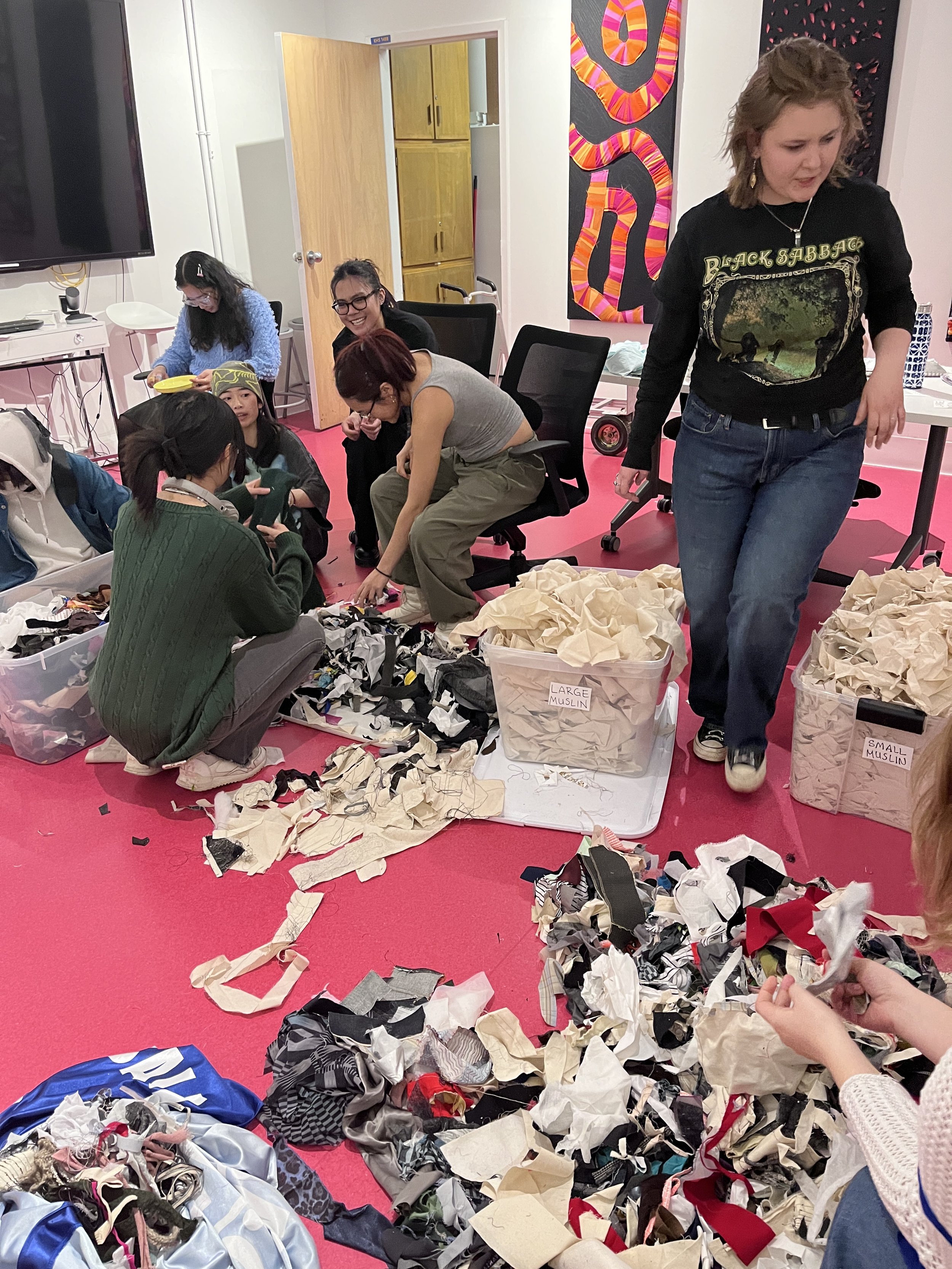
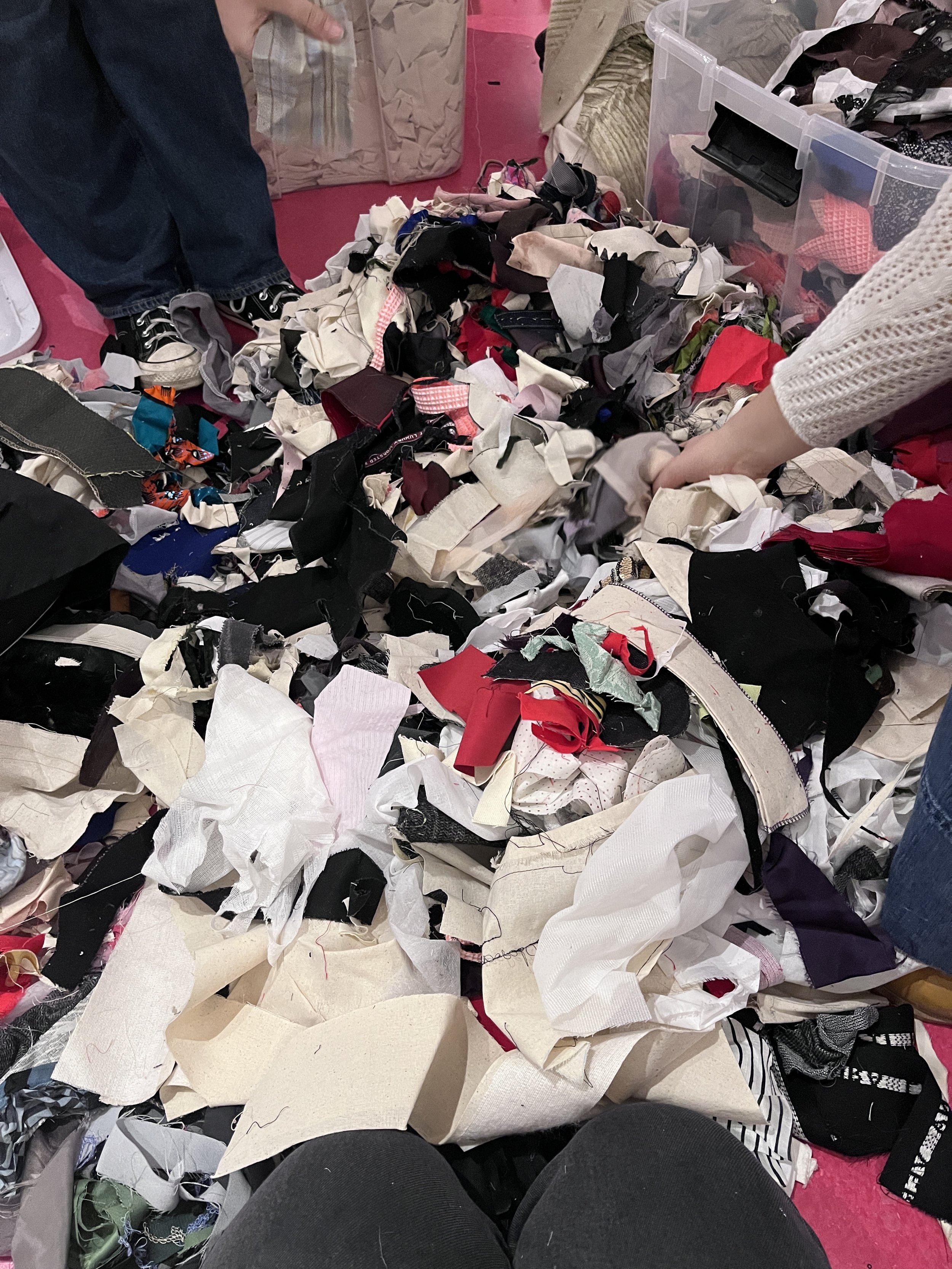
Campus Circular Textile Systems emerged from a contradiction at the heart of sustainable fashion education: students were being taught sustainable design while textile scraps, toiles, and other studio waste continued to be discarded as garbage. What began as repeated conversations with students about this disconnect became a larger research question: how can future designers be taught to reduce waste and design for circularity if that issue is not being addressed within the fashion program itself?
overview
Multiple failed attempts to create a departmental textile recycling system through informal student-led efforts over a four-year period made clear that the problem was not simply awareness or motivation. It was structural. The project was supported by a SSHRC Explore Grant, which made it possible to research, design, develop, and implement a more formalized approach to campus textile waste management within fashion education.
Rather than treating sustainability as an abstract value or an isolated classroom topic, the project examined how textile waste reduction and recycling practices might be embedded within the everyday operations of a fashion program. It asked what happens when students are confronted not only with the idea of sustainability, but with the material realities of waste generated by their own educational environment.
approach
The project investigated textile waste management initiatives, including textile recycling programs, across 35 undergraduate fashion schools in eight countries through a mixed-methods design combining faculty surveys and interviews, an undergraduate student survey, and a participatory action research case study implementing a campus program at a Canadian university.
At its core, the project asked how textile waste systems in fashion education are implemented, what conditions shape their pedagogical value, and how sustainability can be enacted as an institutional practice rather than taught only as course content. The project also examined how students engage with waste reduction, material sorting, recycling logistics, and circularity through direct participation in campus systems.
significance
The research identified three infrastructural configurations through which textile waste and textile recycling initiatives operated: integrated and institutionalized programs, partnership-dependent but fragile programs, and grassroots initiatives reliant on individual champions. Across these configurations, pedagogical depth and program viability were shaped less by faculty or student motivation than by structural support, including budget, defined roles, curricular integration, and stable downstream partnerships.
The study also found that textile waste initiatives can create meaningful opportunities for sustainability learning when students engage directly with material sorting, waste handling, redistribution, and reuse. At the same time, those opportunities remain fragile when programs depend on temporary funding, volunteer labor, or individual commitment rather than institutional support. The participatory action research case showed that students can become active co-creators of institutional change, but that long-term survival depends on infrastructure, not goodwill alone.
More broadly, the project argues that sustainability in fashion education cannot be treated only as content delivered in the classroom. It must also be built into the material systems, routines, and institutional practices through which students learn. Textile waste initiatives become meaningful not simply because they divert waste, but because they expose the contradictions of current fashion practice and create opportunities for students to engage with those contradictions directly.
The findings also highlight the limitations of recycling-centered approaches. Recycling can be pedagogically valuable, but it is not a cure-all. Unless embedded within broader curricular attention to waste prevention, reuse, material literacy, and circular design, textile recycling risks being treated as a downstream fix rather than part of a larger transformation in how fashion education understands materials and responsibility.
outcomes
The project produced a mixed-methods study of textile waste and textile recycling initiatives across 35 undergraduate fashion schools in eight countries, alongside a participatory action research case study implementing a campus program at a Canadian university. The findings showed that the pedagogical depth and long-term viability of these initiatives depend less on faculty or student motivation than on infrastructural conditions such as budget, defined roles, curricular integration, and stable downstream partnerships. The project also demonstrated that campus textile waste systems can function as powerful pedagogical sites, while remaining structurally fragile when they rely on temporary funding, volunteer labor, or individual champions alone
support
SSHRC Explore Grant (2021–2022) supporting research on textile recycling in undergraduate fashion programs.
outputs
Presented at ITAA Annual Conference 2022 as Textile Recycling in Undergraduate Fashion Programs
Journal article under review: From Textile Waste to Transformative Learning: How Infrastructural Conditions Shape Sustainability Pedagogy in Fashion Design Education.
** The Social Sciences and Humanities Research Council (SSHRC) of Canada is a Canadian federal research-funding agency that promotes and supports post-secondary research and training in the humanities and social sciences.