TMU branded materials transition project
How can a university responsibly manage the end-of-life of branded textile materials at institutional scale?
The TMU Branded Materials Transition Project emerged from the Toronto Metropolitan University renaming process, which generated significant textile waste in the form of branded materials that could no longer remain in circulation under the previous name. The branded textiles arm of the project became a creative endeavor, a research project, and an opportunity to develop circular practices within a university institution through reuse, refurbishment, upcycling, donation, and other end-of-life strategies.
overview
The project addresses a large-scale institutional transition problem: how to responsibly manage branded textile materials made obsolete by renaming, including staff uniforms, deadstock merchandise, athletic uniforms, banners, pennants, stadium cushions, and other university-branded items. It examines how circular practices can be developed within a university setting when waste is generated not only by consumption and disposal, but also by institutional change.
To date, 3,528 kg of branded textile materials have been collected from 21 departments, representing 32% of all university branded items identified through the project. The work has involved sorting, allocating, and redirecting these materials into multiple end-of-life streams, including donation, internal reuse, refurbishment, alumni sale, workshops, creative projects, and exhibition.
approach
The Branded Materials Transition Project combines textile sorting, circular systems design, institutional collaboration, and creative research. It addresses both operational and cultural questions: how to build responsible end-of-life pathways for branded materials, and how to use that process to develop broader institutional awareness and circular practice.
The project includes several interconnected components:
large-scale collection and sorting of branded materials across departments
allocation of materials into reuse, refurbishment, workshop, donation, and other streams
collaboration with Athletics & Recreation around retired athletic uniforms
an upcycled fashion show involving TMU Fashion alumni and students
research on the upcycled design process
a public exhibition highlighting upcycling, textile waste, and design transformation
significance
The project demonstrates how institutional change can generate major textile waste streams that are rarely accounted for in university sustainability planning. Rather than treating these materials as straightforward waste, BMTP reframed them as a site for circular intervention, creative practice, and organizational learning.
It also shows that circularity at the institutional level is not a single pathway but a coordinated set of decisions involving reuse, repurposing, refurbishment, creative transformation, selective donation, and internal recirculation. In this sense, BMTP is significant not only because of the volume of material managed, but because it tested how a university could respond to branded textile obsolescence through a combination of logistics, design, and cultural transition.
More broadly, the project highlights the value of embedding circular textile thinking within institutional systems rather than limiting it to classroom or consumer contexts. It positions universities not only as sites of education, but as organizations capable of generating and managing substantial textile waste streams of their own.
project components
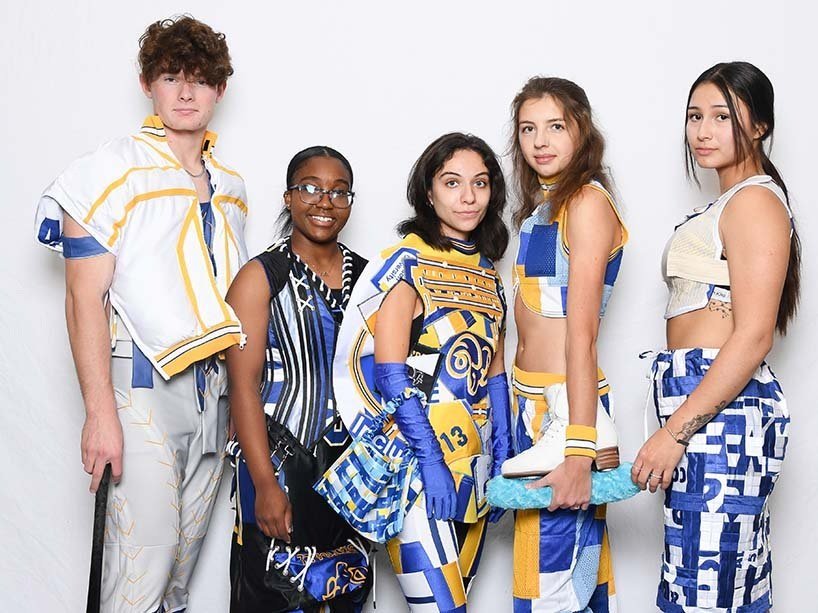
Photo credit: Curtis Martin

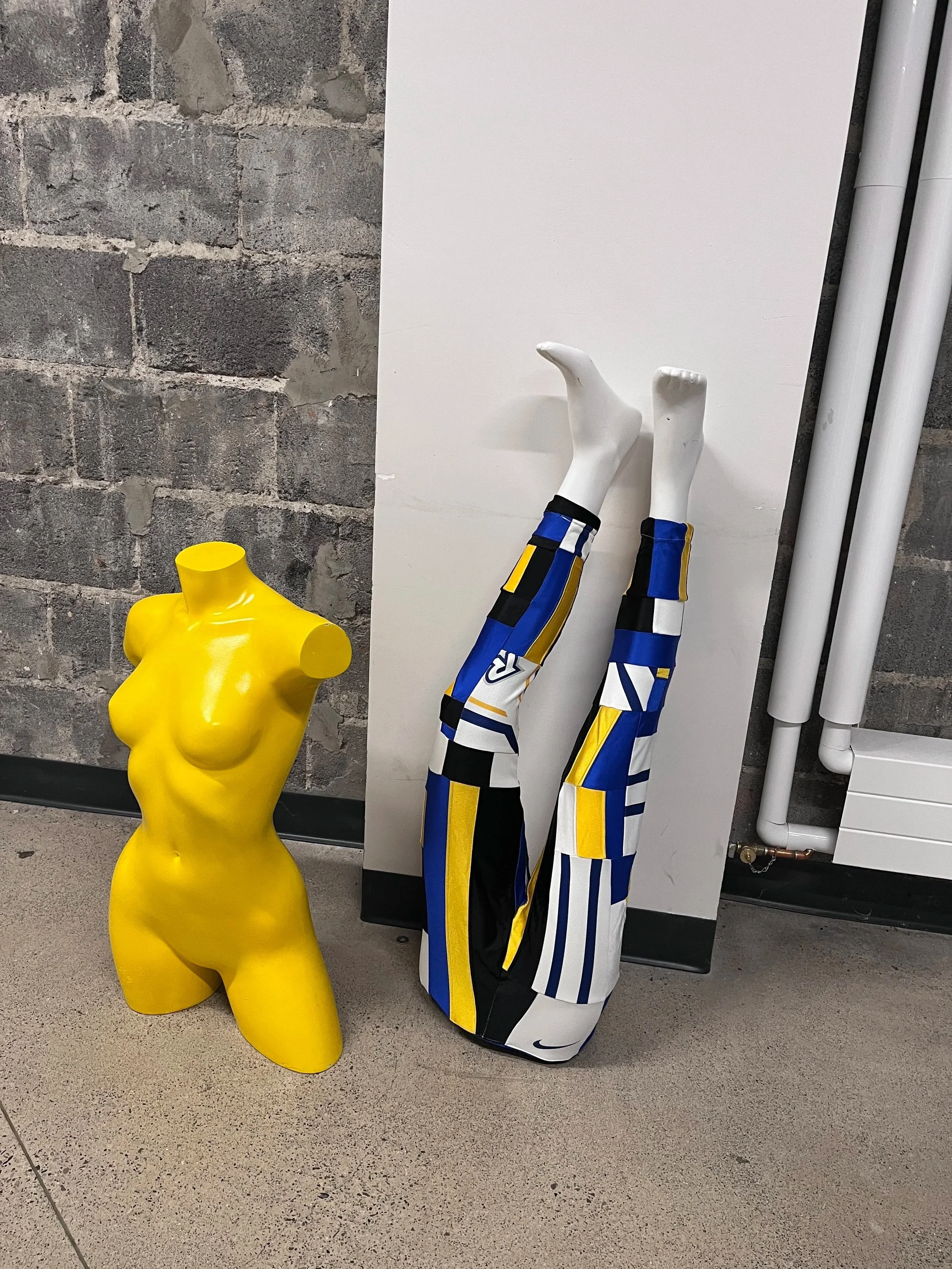
upcycled gear fashion show
A public-facing runway event transforming retired Ryerson and Rams-branded materials into 27 one-of-a-kind looks created by TMU Fashion alumni and students in collaboration with TMU student-athletes.
The Upcycled Gear Fashion Show transformed retired Ryerson and Rams-branded athletic materials into new looks created by TMU Fashion alumni and students. Developed in collaboration with Athletics & Recreation, the event functioned as both a public-facing creative outcome and a practical strategy for redirecting obsolete branded textiles away from landfill.
I led the creative direction of the show with Tricia Crivellaro Grenier, including recruitment, collaboration with designers, distribution of materials, fittings, sustainable design direction, styling coordination, soundtrack, and backstage production. I also co-designed one of the looks with Shelley Haines.
upcycled design practice research
A research component examining how participating designers worked with institutionally obsolete branded materials, negotiated constraints, and transformed them through upcycled design practice.
The fashion show also created an opportunity to examine the upcycled design process in depth. All participating designers, including myself, were part of the study. This component of the project investigated how designers worked with institutionally obsolete materials, negotiated constraints, and transformed pre-existing branded textiles into new forms through creative reuse.
upcycled exhibit
An exhibition extending the project beyond the runway to highlight the upcycled design process and raise awareness about textile waste and material transformation.
Following the fashion show, an exhibition extended the project into a public-facing educational format. The exhibit highlighted the upcycled design process while creating awareness about textile waste and its harmful impacts, making the transformation of branded materials visible beyond the runway event itself.
material flows
A total of 3,528 kg of branded textile materials has been collected to date from 21 departments, representing 32% of all university branded items identified through the project.
Ryerson branded apparel: 2,613 kg
donated to organizations with specific needs: 1,247 kg
kept internally for workshops and future projects: 1,312 kg
refurbished for reuse: 55 kg
Ryerson Rams athletic uniforms: 915 kg
used in the fashion show: 100 kg
sold to alumni: 93 kg
donated to high schools for reuse: 372 kg
kept internally for patching, workshops, and future projects: 350 kg
Additional branded materials continue to be uncovered and added to the project.
outputs
Conference presentation, ITAA Annual Conference 2023: Implementing circular economy thinking in higher education institutions: Hyper-local solutions for sustainable campus management of university-branded textile waste